
Syrian Student Secures Bronze Medal at International Informatics Olympiad
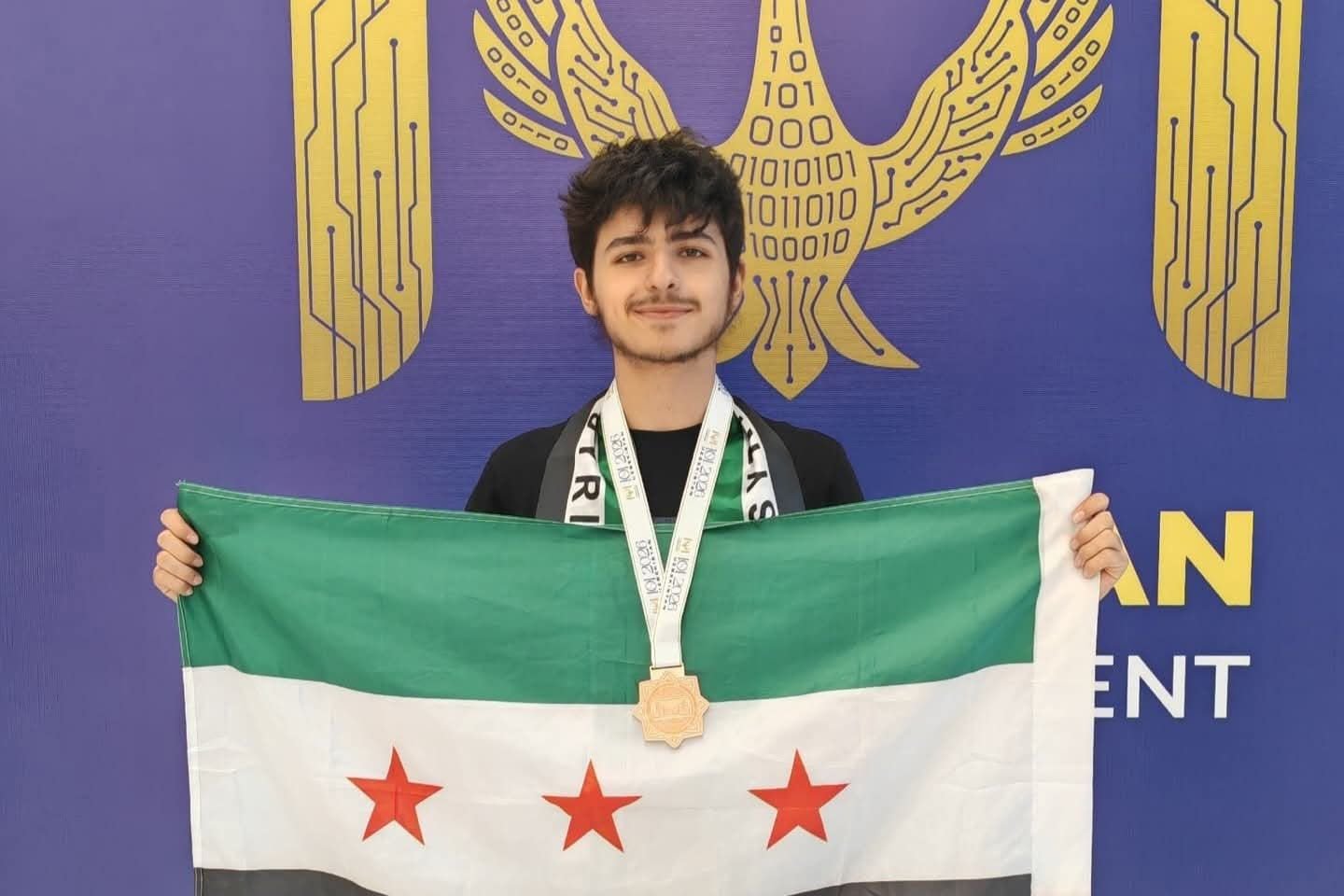
Syrian student Ibrahim Fostoq has achieved a significant milestone in the field of competitive programming, securing a bronze medal at the 38th International Olympiad in Informatics (IOI 2026). The competition, which took place in Uzbekistan from August 9 to 16, marked Fostoq’s first appearance at the prestigious global event.
Fostoq, a recent high school graduate, finished in 101st place out of 375 participants from around the world. His performance was particularly notable for how close it came to a higher honor, as he trailed the silver medal threshold by only seven positions. Reflecting on the accomplishment, Fostoq expressed pride in representing Syria on an international stage and emphasized his determination to refine his skills for future competitions.
His journey into competitive programming began during his youth, inspired by his brother who studied informatics engineering at the University of Damascus and participated in collegiate programming contests. Encouraged by this exposure, Fostoq began honing his technical skills through prominent global training platforms such as Codeforces and AtCoder. Over time, he became a consistent participant in various programming forums, including the IOI, the Asia-Pacific Informatics Olympiad (APIO), and regional university programming contests. His preparation culminated in an intensive training camp organized by the Syrian Excellence and Creativity Commission shortly before the team’s departure for Uzbekistan.
Fostoq acknowledged that the path to success was not without its challenges. Early in his academic career, he faced setbacks when he was not initially selected for the national informatics team. However, rather than discouraging him, the experience served as a catalyst for deeper self-study and increased persistence. He highlighted the importance of peer support networks in overcoming limited local resources, noting that engaging with online communities of like-minded programmers helped him bridge gaps in his training.
Regarding the competition itself, Fostoq described the tasks as multifaceted, requiring a blend of creativity, rigorous analytical thinking, and the ability to approach complex problems through varied algorithmic methodologies. He credited the Syrian Excellence and Creativity Commission for its ongoing support and pointed to the collaborative spirit among the Syrian delegation as a key factor in the team’s overall performance.
Syria was represented at the 2026 Olympiad by a four-member team, including Fostoq, Hadi Suleiman, Ghassan Hassan, and Mohammad Adeeb Obaido. Hadi Suleiman also performed strongly, earning a silver medal. For Fostoq, this international success is just the beginning. He remains committed to continuing his rigorous training regimen, viewing participation in scientific Olympiads as a vital gateway for acquiring high-level technical expertise that will serve him throughout his future academic and professional career.
