New Syrian Literary Releases Highlight Regional Intellectual Renewal
The Syrian publishing sector is experiencing a period of intellectual revitalization, with a wave of new releases spanning fiction, historical research, travel literature, and linguistics. These works, issued by various regional houses in Damascus, reflect a growing collective focus on themes of freedom, identity, and the documentation of memory within the Middle East.
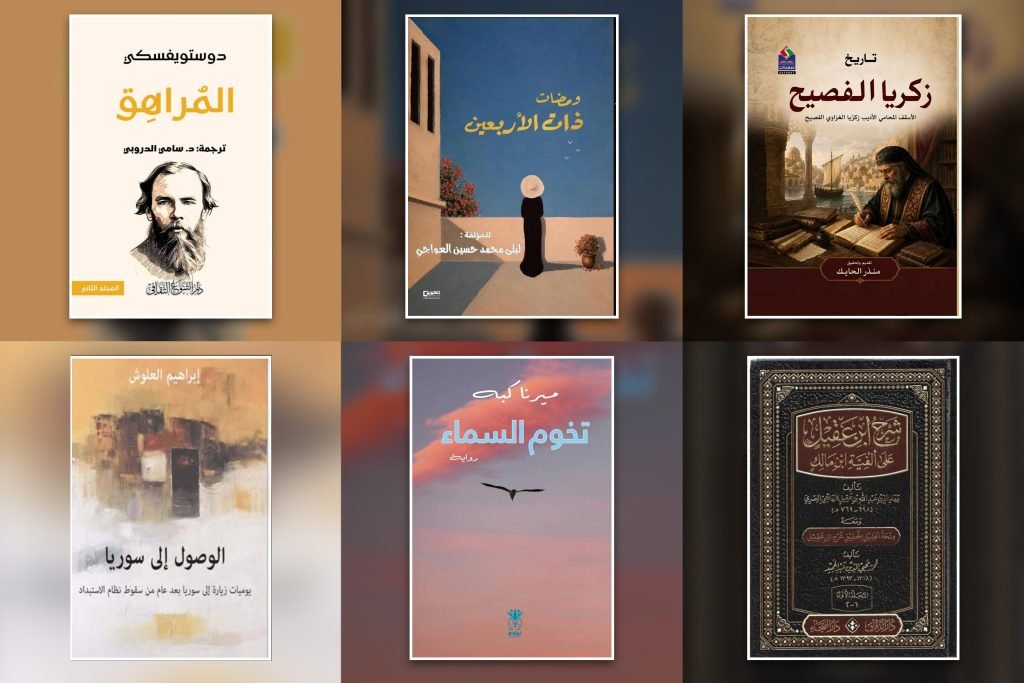
Among the notable fiction releases is Myrna Kabbeh’s novel, ‘The Horizons of Heaven’. The work presents a philosophical inquiry into human agency, contrasting two distinct paths: one defined by spiritual integrity and the pursuit of existential goals, and the other hindered by fear and self-imposed isolation. Through these parallel narratives, the author examines how the choices individuals make ultimately define their personal freedom and destiny.
In the realm of social development, Saudi author Laila Mohammed Hussein Al-Awaji has contributed a new volume titled ‘Flashes of the Forties’. This work functions as a guide for self-development and community awareness, offering practical wisdom and humanistic observations intended to foster societal progress and individual growth.
The literary landscape in Damascus also continues to engage with classic global intellectual heritage. A new translation of Fyodor Dostoevsky’s ‘The Adolescent’, rendered into Arabic by Dr. Sami Al-Droubi, has been released. The novel, which explores the complexities of identity formation and generational conflict during one’s formative years, remains a significant psychological study that continues to resonate with contemporary Middle Eastern readers navigating similar social transformations.
Historical and travel literature remain central to the region’s publishing output. Ibrahim Al-Aloush’s ‘Reaching Syria’ provides a personal account of his travels across various Syrian cities. As a piece of travel and cultural writing, the book serves as both a memoir and a record of observations during a period of significant national transition. Similarly, history enthusiasts have seen the publication of ‘The History of Zechariah the Rhetor’, edited by Munther Al-Hayek. This text is recognized as a primary source for understanding the political and religious shifts that defined the Mediterranean and Levant regions during the sixth century, offering researchers valuable insights into the Byzantine era and its neighboring states.
Finally, the preservation of linguistic heritage remains a priority, evidenced by the new edition of ‘Sharh Ibn Aqil’ on the famous ‘Alfiyya’ of Ibn Malik. This classic Arabic grammar reference, featuring annotations by Sheikh Muhammad Muhyi al-Din Abd al-Hamid, underscores the enduring importance of maintaining linguistic precision and education in the Arab world. By balancing traditional scholarly rigor with accessible commentary, this release serves as an essential resource for students and academics alike.
Collectively, these publications demonstrate the resilience of the Syrian literary scene. By documenting historical truths and exploring the complexities of the human condition, these authors and editors are contributing to a broader regional discourse on memory, social ethics, and the preservation of cultural heritage in an evolving geopolitical landscape.
