
Ministry of Transport and Oversight Body Host Governance Workshop
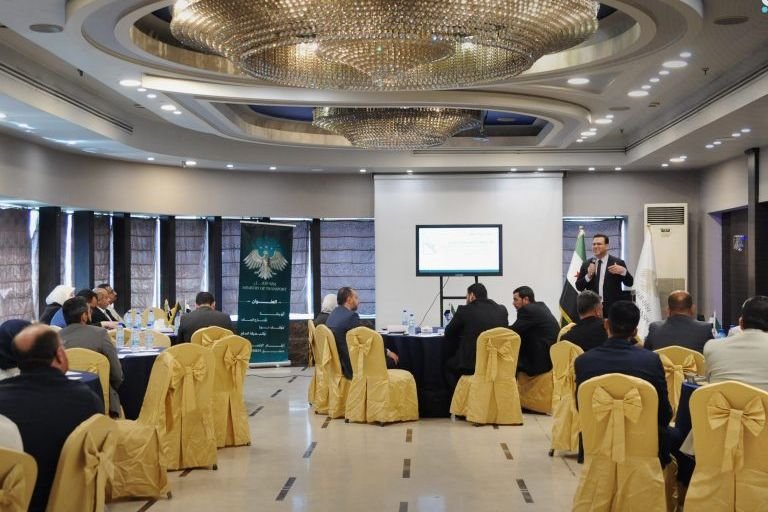
The Syrian Ministry of Transport, in coordination with the Central Agency for Control and Inspection, held a specialized workshop in Damascus titled “Towards Effective Internal Oversight.” The event aimed to strengthen governance and transparency standards within public institutions, focusing on the construction of a robust internal control framework to optimize performance and improve the management of public resources.
The workshop, held at the Blue Tower Hotel in Damascus, brought together officials to discuss the operational objectives of the Central Agency for Control and Inspection. Sessions covered the agency’s structural reforms, its administrative reporting procedures, and the professional standards required for personnel working in internal audit and oversight functions. Participants also examined the scope of institutions subject to such oversight, which includes various ministries, independent public bodies, provincial administrations, and popular organizations.
Minister of Transport Yarob Badr emphasized the necessity of a collaborative relationship between executive ministries and oversight bodies, describing the current approach as a partnership rather than a confrontational process. Minister Badr noted that the objective of internal oversight is not merely to detect errors, but to act as a preventative mechanism that evaluates outcomes, identifies systemic weaknesses, and proposes sustainable solutions. He stressed that by working in tandem, these agencies ensure that the public service remains committed to the constitution and the law, ultimately serving the interests of citizens and protecting state assets.
Echoing this perspective, the head of the Central Agency for Control and Inspection, Amer Al-Ali, highlighted the shift toward a proactive oversight model. He explained that by moving from retrospective auditing to preventive, risk-based management, the agency aims to address operational flaws before they evolve into significant administrative challenges. Al-Ali described the internal control units as professional partners tasked with rationalizing resource use and enhancing institutional culture, rather than acting solely as punitive entities.
The agency unveiled a strategic plan to bolster these efforts, which includes a four-month intensive training program for specialized personnel. This initiative seeks to build an integrated surveillance apparatus across various ministries and governorates, with a target of securing between 20 and 40 qualified monitors for each ministry by 2027. The Ministry of Transport is expected to receive an initial allocation of 50 newly trained staff members to support its internal departments.
Participants in the workshop concluded that internal oversight serves as the first line of defense for public institutions. By fostering a culture of continuous improvement and accountability, the ministry and the oversight agency aim to align their procedures to better serve national development goals and ensure the efficient delivery of services across the transport sector.
