Latakia University Hospital Hosts Specialized Glaucoma Surgery Initiative
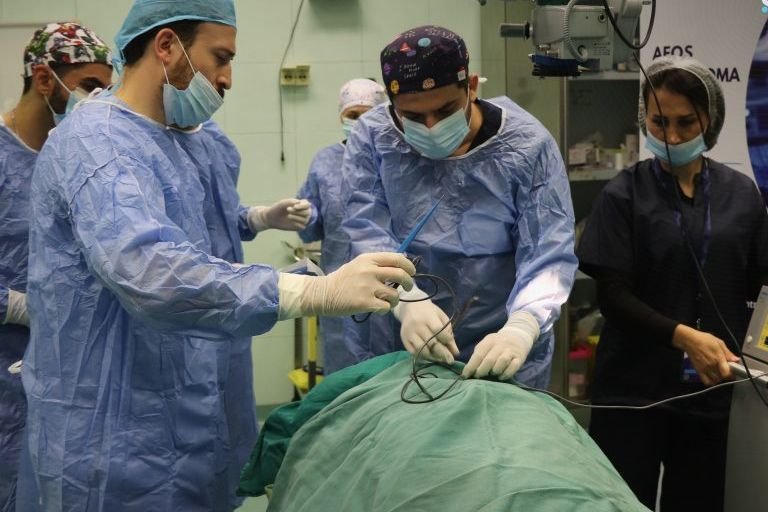
Latakia University Hospital has successfully completed a series of specialized clinical examinations and advanced surgical procedures for patients suffering from glaucoma. The medical initiative was conducted in collaboration with Dr. Obeida Al-Kilani, a consultant ophthalmologist specializing in glaucoma at the University of London and Director General of the European-Arab Ophthalmological Society.
The medical visit, which focused on both clinical intervention and academic exchange, included a comprehensive review of patient records at the hospital. Dr. Al-Kilani and the local medical team analyzed cases from the past three years, specifically focusing on patients dealing with elevated intraocular pressure and those currently undergoing pharmacological treatment. This review enabled the selection of candidates for trabeculectomy, a specialized surgical procedure designed to lower eye pressure and prevent further vision loss.
During his visit, Dr. Al-Kilani emphasized the critical nature of the condition, often referred to in the medical community as the “silent thief of sight.” He highlighted that because glaucoma frequently progresses without clear, immediate symptoms, patients often do not seek medical attention until the disease has reached advanced stages where permanent vision loss may have already occurred. Given this reality, he underscored that increasing public awareness regarding regular screenings is a medical necessity for the Syrian population.
In addition to the surgical operations, the program served as a significant educational platform. Dr. Al-Kilani conducted a series of scientific lectures and academic meetings with postgraduate students specializing in ophthalmology. These sessions provided local residents and medical trainees with direct access to modern diagnostic techniques and global standards in surgical practice, contributing to the development of the academic and practical competencies of young Syrian doctors.
Assessing the state of medical infrastructure in the country, Dr. Al-Kilani observed that the hospitals he visited in Damascus, Aleppo, and Latakia possess solid foundations in terms of physical facilities and qualified teaching staff. However, he noted that there is a discernible need for advanced medical equipment and specialized surgical instruments, pointing toward the importance of sustained national efforts and international support from volunteer medical associations to bridge these gaps.
Abdul Nasser Radwan, Director of the Latakia University Hospital, lauded the initiative, stating that such collaborations are vital to the institution’s ongoing service and educational missions. He noted that these efforts facilitate the exchange of expertise between Syrian medical professionals working abroad and their counterparts within the country, reflecting a shared commitment to national development in the healthcare sector. The hospital plans to continue integrating these international initiatives to enhance the quality of healthcare services provided to patients and to foster professional growth for medical students across the province.
