
“The Green Bus”: A Documentary on Forced Displacement in Damascus
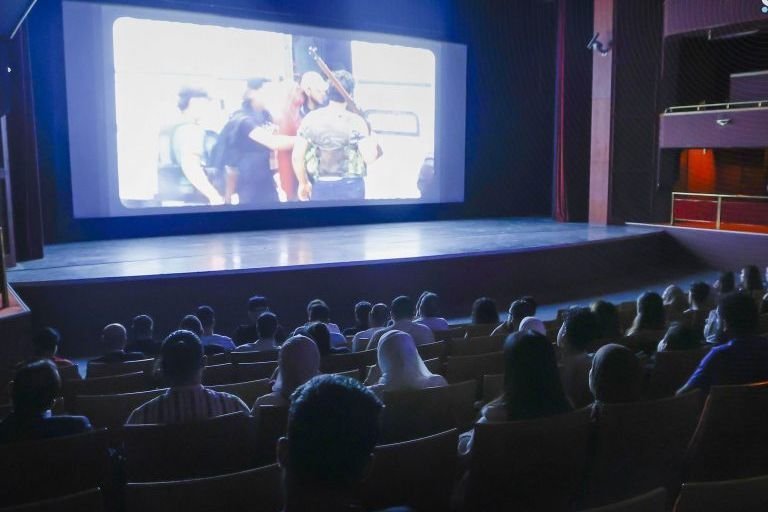
The Damascus Opera House recently hosted a special screening of the documentary “The Green Bus: Tales of Forced Displacement,” directed by Fadi Baaj. Organized by the Ministry of Culture, the event aimed to preserve a significant aspect of the Syrian memory formed during the years of the crisis. The film offers a documentary treatment based on direct testimonies and expressive imagery, reconstructing the details of the journeys experienced by Syrians from regions including Homs, Hauran, Aleppo, and Eastern Ghouta.
The film focuses on the personal experiences of four Syrian individuals. By placing human stories at the center of the narrative, the director shifts the focus away from cold statistics and figures, using individual experiences as a narrative thread to connect successive stages of displacement. Baaj utilized an expressive visual language, reconstructing scenes and details that evoke the participants’ memories, lending the work a dramatic dimension that enhances its value as a cinematic document.
In a statement to the media, director Fadi Baaj explained that the film was produced in two stages. The first part was filmed before reconciliation processes, while the segments featuring the film’s subjects were completed later. Baaj emphasized that the timing of the screening at the Opera House carries significant symbolic weight, particularly for the participants, who had not expected their documentation to reach such a level of public presentation. He noted that the film’s message lies in the importance of documenting painful periods, pointing out that the “Green Bus” was not merely a mode of transport but, in the Syrian collective memory, has become a symbol of the evacuation and forced displacement operations imposed on besieged areas, ranging from Old Homs in 2014 to various locations in Rif Dimashq, Aleppo, and Daraa.
Technically, the film adopts a vision that transcends the notion of displacement as a fleeting event that ends upon arrival. Instead, it delves into the psychological and social consequences of this process, examining the emotional connection between displaced persons and their original homes. The film weaves individual stories with the collective memory of cities and neighborhoods, transforming personal testimonies into part of a broader history that cinema seeks to preserve for future generations.
The screening at the Opera House carries added significance by transitioning a narrative long associated with besieged areas into a public cultural space. This provides the audience with the opportunity to engage with a documentary that treats memory as both artistic and human material. Ultimately, the work seeks to cement the role of cinema in questioning the past and reclaiming the voices of those who experienced displacement, ensuring that art remains a tool to safeguard human experience from being forgotten.
