Syrian Atomic Energy Commission Launches Nuclear Engineering Courses
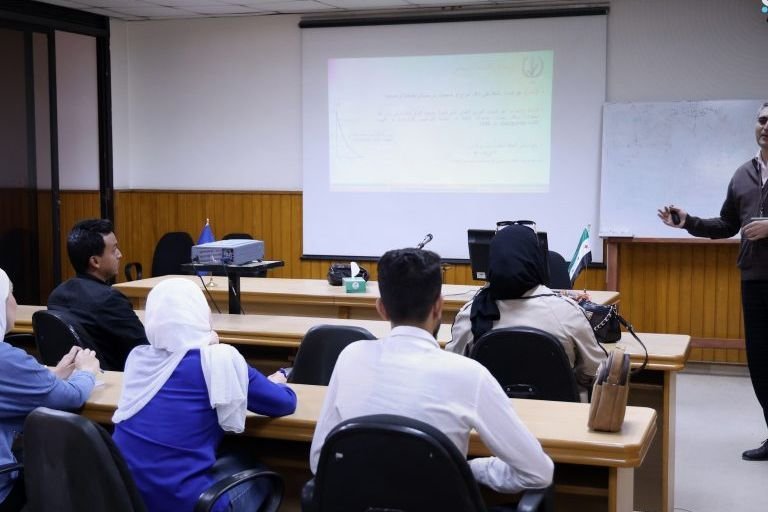
In a move aimed at strengthening academic and technical cooperation, the Syrian Atomic Energy Commission has announced the commencement of lectures for fourth-year students specializing in nuclear engineering. This initiative, which began in the first semester of the 2026–2027 academic year, marks a significant milestone in the partnership between the commission and the Faculty of Mechanical and Electrical Engineering at Damascus University.
The collaboration is designed to supply the nation’s nuclear science and energy sectors with highly qualified national experts. By aligning the resources of the research commission with the university’s academic framework, the program seeks to build a robust pipeline of specialized professionals capable of supporting Syria’s technical and developmental goals.
The current academic curriculum features a rigorous selection of specialized subjects. These courses are intended to provide students with advanced scientific and technical knowledge essential to the field. The syllabus includes Neutron Analysis and Design, Nuclear Reactor Engineering, Interaction of Radiation with Matter, as well as modules on radiation detection and shielding. The courses are delivered by a team of prominent professors and experts who specialize in nuclear science and technology.
From an organizational perspective, the lectures are held at the administrative headquarters of the Syrian Atomic Energy Commission. This venue operates in tandem with the established lecture schedules at the Faculty of Mechanical and Electrical Engineering, ensuring that the educational process remains aligned with the curriculum approved by both institutions.
This initiative is part of a broader strategic focus on supporting specialized higher education. By providing an environment that effectively bridges the gap between theoretical knowledge and practical, technical application, the program is expected to directly contribute to the training of national talent. This partnership exemplifies the integrated roles of state research and educational institutions in developing scientific curricula that meet the requirements of the local labor market, particularly in specialized fields that serve Syria’s technical development and infrastructure planning.
Source: Syria Focus Arabic
