
Syria Records Over 3.5 Million Tons of Freight Transport in July
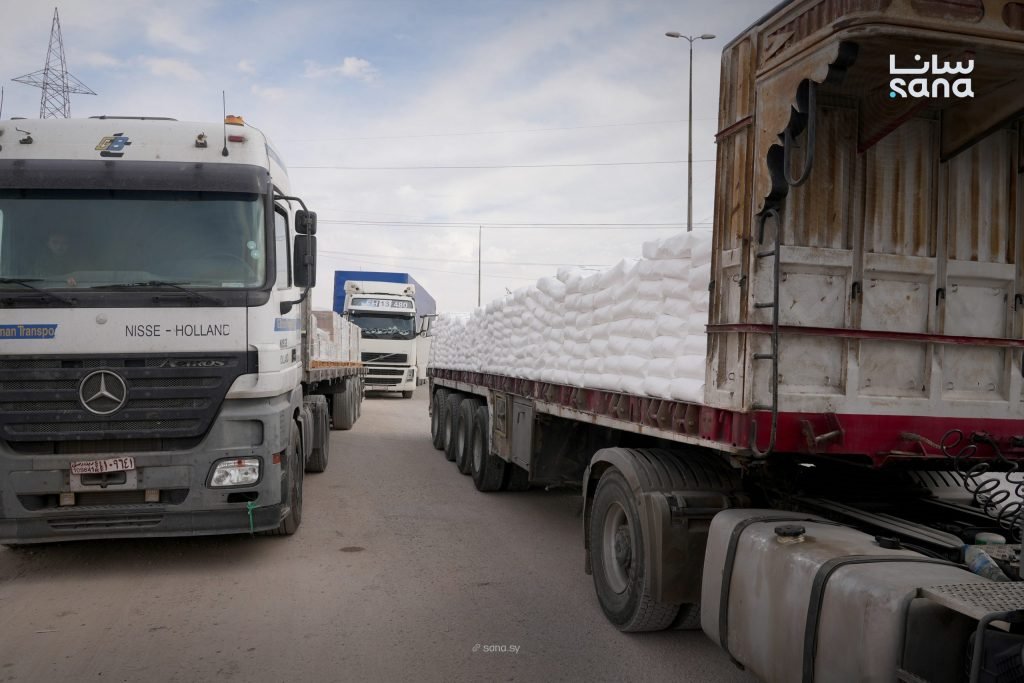
Syria’s transport sector recorded a significant volume of freight activity during the month of July, with the Directorate of Freight Transport overseeing the movement of more than 3.55 million tons of goods. This figure underscores a sustained effort to maintain supply chains and distribution networks across the country, encompassing both domestic circulation and cross-border operations.
According to official data released by the Directorate, the overwhelming majority of this cargo—approximately 3.42 million tons—was transported within the country to meet the needs of various governorates. A smaller portion, totaling nearly 127,000 tons, was designated for export. The operations involved a complex logistics effort, executed through a combination of approximately 69,700 public-sector regulated loads and over 151,800 private-sector shipments, totaling 221,603 individual transport missions throughout the month.
Aleppo emerged as the primary hub for domestic freight distribution, leading all Syrian governorates with 1.42 million tons of goods handled. Deir ez-Zor followed as the second-largest center for domestic logistics, recording nearly 500,000 tons. The coastal governorate of Tartus and the central region of Raqqa also played critical roles in the national supply chain, moving 456,000 and 393,000 tons, respectively.
In contrast, the geography of export logistics was concentrated in different areas. Idlib governorate accounted for the vast majority of goods intended for markets outside Syria, totaling approximately 115,000 tons. Tartus and Latakia contributed significantly smaller volumes to the export total, reflecting the ongoing strategic importance of northern transit routes and coastal logistics points in facilitating trade.
The diverse range of commodities transported reflects the essential needs of the Syrian economy. The freight movement focused heavily on staple resources and infrastructure materials, including grain supplies, cement, iron, animal feed, and livestock. The movement of these specific goods is vital for maintaining food security and supporting ongoing construction and industrial recovery efforts in areas affected by years of instability.
The July figures align with the broader operational trends observed throughout the year. For the first half of 2024, the Directorate reported a massive total of 24.5 million tons of goods processed. By managing the flow of these critical materials, the Ministry of Transport aims to ensure that regional imbalances are mitigated and that basic supplies reach the populations and commercial sectors that need them most.
As the country continues to navigate economic challenges, the ability to coordinate this level of inland and cross-border transport remains a cornerstone of the state’s logistical strategy. The consistency in these figures suggests that despite systemic obstacles, the organized movement of essential goods remains a functional, high-volume component of the Syrian infrastructure apparatus.
