
Latakia Holds Awareness Seminar for Olive Press Operators
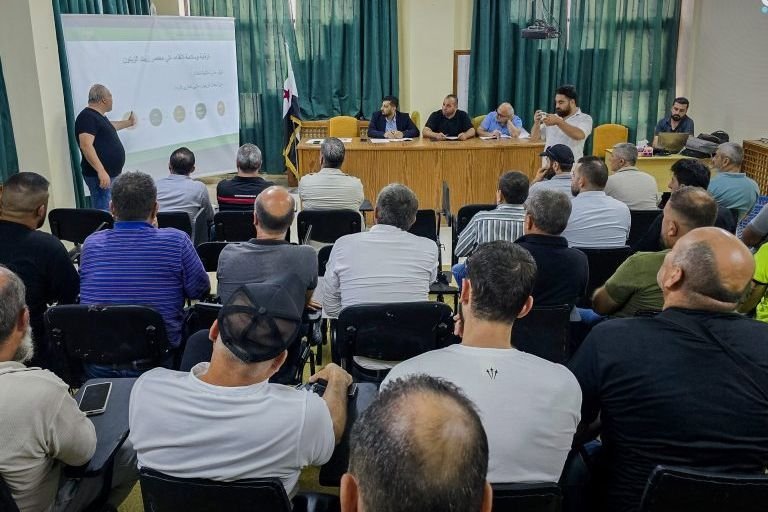
The Internal Trade and Consumer Protection Directorate in Latakia province has hosted an extensive awareness seminar for owners of olive presses as part of ongoing preparations for the upcoming harvest season. The initiative aims to ensure full compliance with technical standards and health requirements to maintain the quality of locally produced olive oil and protect consumer rights.
The seminar, held at the Syrian Grain Establishment branch auditorium, provided a detailed explanation of the regulatory procedures and instructions governing pressing operations and product handling. Abdul Wahab Safar, Director of Internal Trade and Consumer Protection in Latakia, emphasized that the primary goal of the meeting is to familiarize press owners with the legal requirements they must follow. He noted that adherence to these standards is essential to prevent supply violations, which could result in punitive measures, including the closure of facilities. He further underscored the mandatory requirement that all products must meet Syrian standard specifications.
Safar indicated that current projections suggest a bountiful olive harvest this season. Consequently, the directorate plans to intensify supply control patrols to monitor operations at the presses and ensure that production processes proceed according to established regulations. He affirmed that the directorate is committed to providing the necessary support and facilities to press owners to ensure the success of the season.
This seminar builds upon previous meetings held by the Central Technical Committee for Monitoring Olive Presses, which convened at the Ministry of Agriculture in Damascus last July. Those meetings focused on technical strategies to improve the efficiency of presses and enhance the quality of Syrian olive oil.
The olive sector serves as a fundamental pillar of the national economy. Statistics from the previous year indicate that Syria is home to over 101 million olive trees, approximately 90 million of which are productive. This sector is the third-largest agricultural crop in the country, contributing roughly 3 percent to the national income and up to 9.5 percent of the total agricultural income. Given these figures, the regulation of pressing operations and the preservation of product quality are considered strategic priorities for the relevant government authorities to bolster the competitiveness of local products and safeguard this essential national resource.
Source: Syria Focus Arabic
