Damascus Intensifies Diplomatic Campaign Against Golan Annexation
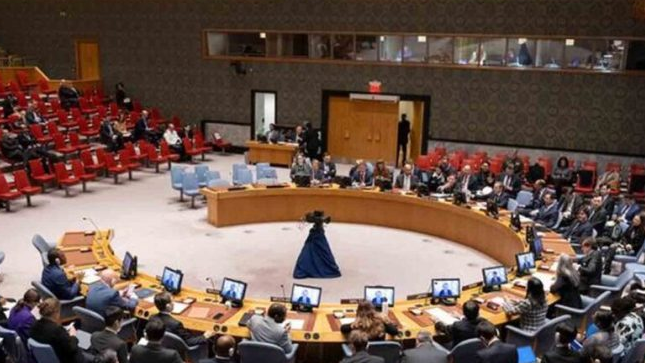
The Syrian government is pursuing a strategic diplomatic campaign aimed at reinforcing the legal status of the occupied Golan Heights and blocking international recognition of its annexation by Israel. Following recent shifts in regional geopolitics, Damascus has centered its efforts on the strict application of international law, specifically UN Security Council Resolution 497, to assert its territorial sovereignty.
The core of the Syrian position remains the 1981 Security Council resolution, which declared Israel’s imposition of its laws and administration over the Golan to be null, void, and without international legal effect. Damascus continues to demand a full withdrawal of Israeli forces to the line of June 4, 1967, emphasizing that the territory is an integral part of Syria and that its legal status is non-negotiable.
Damascus has measured the success of its diplomatic outreach through the growing international consensus against the annexation. Records from the Ministry of Foreign Affairs indicate that the number of countries supporting UN General Assembly resolutions regarding the Golan reached 123 in 2025, up from 97 the previous year. This “diplomacy of numbers” is being used as a tool to demonstrate that the international community largely rejects unilateral attempts to alter the legal or demographic character of the occupied lands.
Parallel to its work in global forums, Syria has engaged in indirect talks facilitated by the United States. These discussions have focused on security arrangements in the southern region, specifically the restoration of the 1974 Disengagement of Forces Agreement. Syrian officials, led by Foreign Minister Asaad Hassan al-Shaibani, have maintained that these security-focused negotiations are distinct from the status of the Golan. The government has repeatedly stated that discussions regarding regional stability do not constitute a surrender of its claims or rights concerning the occupied territory.
President Ahmed al-Sharaa has reinforced this message on multiple occasions, including at international summits in New York and Antalya, where he stressed that Syria remains committed to reclaiming its land through legal and diplomatic channels. The government has also utilized these platforms to protest recent developments, such as the announcement by Colombia recognizing Israeli sovereignty over the Golan.
Following Colombia’s declaration—the second such move by a nation following the United States—Damascus launched a formal protest through the United Nations. In a letter to the UN Secretary-General, Syrian authorities reaffirmed that such individual recognitions hold no legal weight under international law and do not alter the status of the Golan as occupied Syrian territory. This stance has garnered support from various regional and international partners, including the European Union and the Organization of Islamic Cooperation, which reiterated their commitment to the established legal framework regarding the Golan. As diplomatic activities continue, Syria remains focused on maintaining the pressure on the international community to uphold the principles of sovereignty and non-acquisition of territory by force.
