
Temperatures Rise Across Syria Amid Hot Air Mass
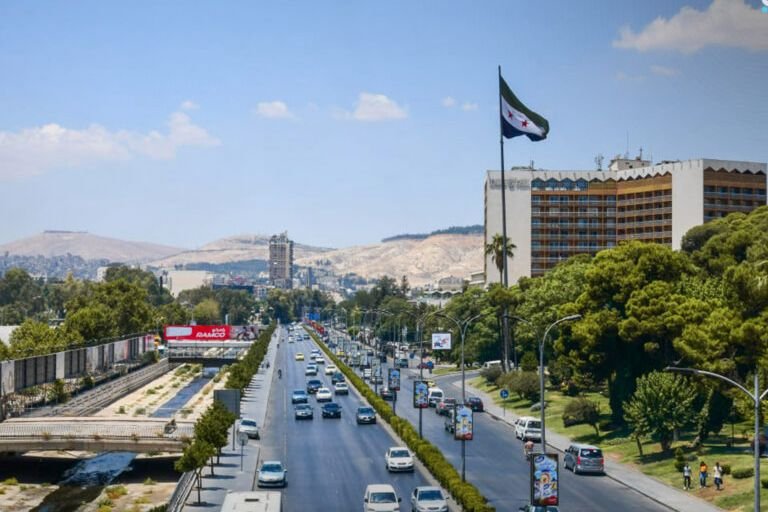
Syria is experiencing a shift in weather patterns this week as temperatures trend upward, marking the arrival of a hot air mass that is expected to intensify across the country. According to meteorological assessments, the current rise will bring temperatures around or slightly above their typical annual averages for this time of year in most Syrian provinces.
The National Center of Meteorology reports that the country is currently under the influence of a thermal system that will deepen its impact significantly by Friday and Saturday. The effects of this heat wave are expected to begin receding by Sunday, offering a brief period of warmer-than-average conditions before a transition back to more moderate seasonal norms.
During the daylight hours, the weather is characterized by standard summer conditions that transition into relative heat in the eastern regions. While the skies remain clear in most parts of the country, the western regions are experiencing partial cloud cover. Despite the warming trend, there remains a persistent, albeit slight, possibility of sporadic rain showers affecting parts of the coastal and northwestern areas. Meanwhile, the eastern provinces and the Jazeera region are seeing hazy and dusty conditions.
As evening falls, the atmosphere turns moderate and generally pleasant, with a cooler trend noted in the mountainous regions. The western areas are seeing higher humidity levels during the night, leading to warnings regarding the potential formation of light fog in parts of the coastal mountain ranges and central regions during the late night and early morning hours.
Wind patterns are contributing to the evolving weather conditions. Winds are blowing from the west to the northwest in the eastern and Badia regions, while in the rest of the country, they are coming from the west to the southwest. These winds are generally light to moderate, but with active gusts expected to exceed 45 km/h during the afternoon hours, particularly in the central, southern, and northwestern zones. These gusty conditions are causing dust and sand to stir in some internal, eastern, and Jazeera areas. At sea, the state of the water is reported as light to moderate, with relatively low wave heights.
Temperature fluctuations across the governorates remain a point of focus for residents, with peak heat recorded in eastern provinces like Deir ez-Zor and Al-Hasakah, while coastal cities such as Latakia and Tartus maintain relatively lower, more stable temperatures. The overall climatic situation across the country reflects a period of instability as the regional air mass exerts its influence before the predicted cooling trend sets in next week.
