
Syria Launches $1.5 Million ‘Seed’ Project for Rural Women
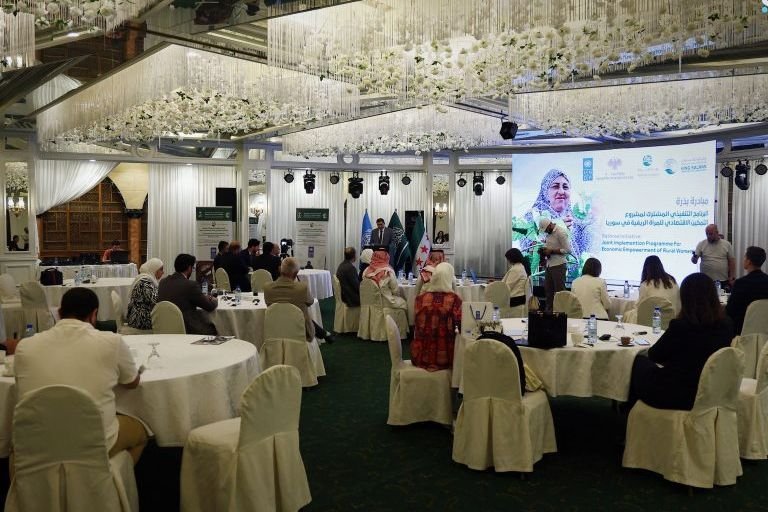
The Syrian Ministry of Agriculture, in cooperation with the International Cooperation Department at the Ministry of Foreign Affairs and Expatriates and supported by the King Salman Humanitarian Aid and Relief Centre (KSrelief), has launched a new economic empowerment project for rural women titled the “Seed Initiative” (Bithra). The project was officially announced during a ceremony in Damascus, attended by representatives from the United Nations Development Programme (UNDP), which is responsible for implementing the initiative’s activities.
The project carries a total budget of $1.5 million and is scheduled to run for a period of 18 months. It is designed to provide targeted economic support to approximately 520 women from vulnerable backgrounds, with indirect benefits expected to reach an estimated 285,320 people. Key focus areas include training women in entrepreneurship and community leadership, supporting small-scale projects, and developing centers for food processing and organic fertilizer production. A primary goal of the project is to connect these women-led products to local markets.
Mohammad Bathish, head of the UN Cooperation Department at the Ministry of Foreign Affairs and Expatriates, stated that the project represents a significant shift from direct relief aid toward long-term support. He emphasized that the initiative aims to achieve economic sustainability for Syrian women, highlighting their role as essential partners in supporting the local economy, particularly in light of the challenges women have faced during years of war.
Assistant Minister of Agriculture Mohammad Al-Miqdad explained that the “Seed Initiative” aligns with the ministry’s policies to transform Syrian rural areas into inclusive developmental spaces. He noted that the project is intended to empower individuals, enhance productivity, and increase women’s contribution to the gross domestic product. The ultimate objective is to transition women from being aid recipients to becoming active partners in the development process.
On the ground, the project will be implemented in three primary sites: the Zabadani and Hujayra areas in Rural Damascus, the Safsafah center in Tartus, and the Al-Ghab center in Hama. Hawazen Al-Miqdad, director of the Directorate of Agricultural Extension and Rural Development, explained that activities at each center will be tailored to the specific agricultural characteristics and local needs of the respective regions, with a focus on food processing and organic fertilizer production techniques.
Reem Ashi, head of the Energy, Climate, and Environment team at the UNDP, indicated that the selection of beneficiaries will follow strict criteria based on regional needs and necessary skill sets to ensure the sustainability of the projects. The “Seed Initiative” is part of a broader humanitarian effort to support small-scale producers in affected areas and foster self-reliance among families through technical training, empowerment tools, and productive equipment.
