
Syria Approves International Airway L602 to Boost Regional Aviation
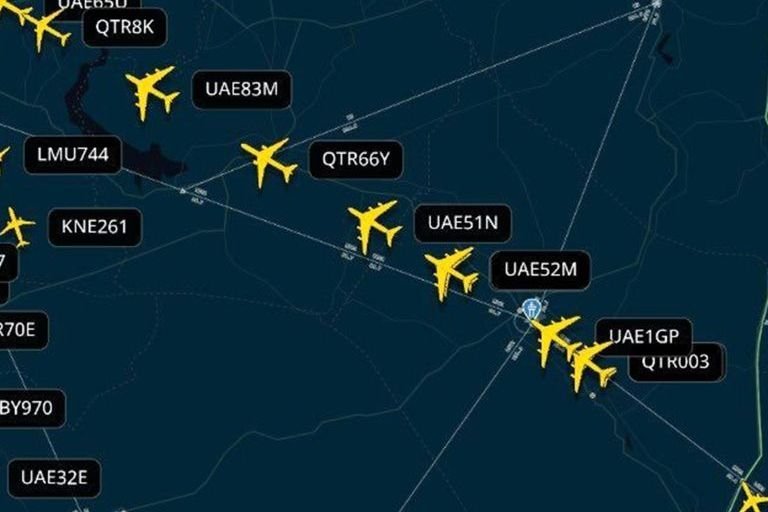
The Syrian General Authority for Civil Aviation has announced a significant development in the modernization of the country’s aerial navigation network with the formal adoption of international airway L602. The route passes through the eastern region of Syria, specifically in the vicinity of Deir ez-Zor.
This decision follows months of intensive technical studies aimed at ensuring full compliance with international safety and air navigation standards. Omar Al-Hosari, head of the authority, stated that the activation of this route serves as a fundamental pillar for enhancing civil aviation traffic between the Arabian Gulf states and European nations.
Al-Hosari explained that the achievement is the result of comprehensive technical and administrative efforts, including detailed aircraft traffic simulations conducted in coordination with neighboring countries and relevant international aviation organizations. The initiative is designed to provide more streamlined and direct flight paths, thereby increasing the efficiency and safety of air traffic through Syrian airspace.
The success of this initiative in restoring the role of Syrian airspace in regional and international aviation is already evident in the data. Since the route’s operational commencement, the corridor has recorded 2,188 transit movements as of the evening of September 18. Airway L602, which is identified in navigation charts as the ELEXI–DRZ–GAZ path, serves as a vital component of the regional aerial network, providing strategic connectivity between major air transport hubs in the Gulf and European markets.
Parallel to these developments, Al-Hosari emphasized that progress is also being made in upgrading the infrastructure of Syrian airports. Calibrations and flight tests for the Instrument Landing System (ILS/DME) at Damascus International Airport have been successfully completed in accordance with CAT II standards. This ensures the system is fully operational without restrictions, significantly enhancing the reliability of takeoff and landing procedures, particularly during periods of low visibility.
These measures are part of a broader strategy adopted by the authority to gradually and methodically rebuild Syria’s air connectivity network. Al-Hosari noted that the authority’s vision extends beyond airport rehabilitation to include the modernization of airspace management and navigation systems. The goal is to maximize the benefits of Syria’s geographical position and convert it into operational value within the international transport network. These technical advancements coincide with other positive indicators, including the resumption of direct flights between Damascus and several European destinations, as well as the return of international airlines to using Syrian airspace, further reintegrating Syria into the regional aviation map.
