
Old Damascus Markets: Historical Witnesses to Artisan Identity
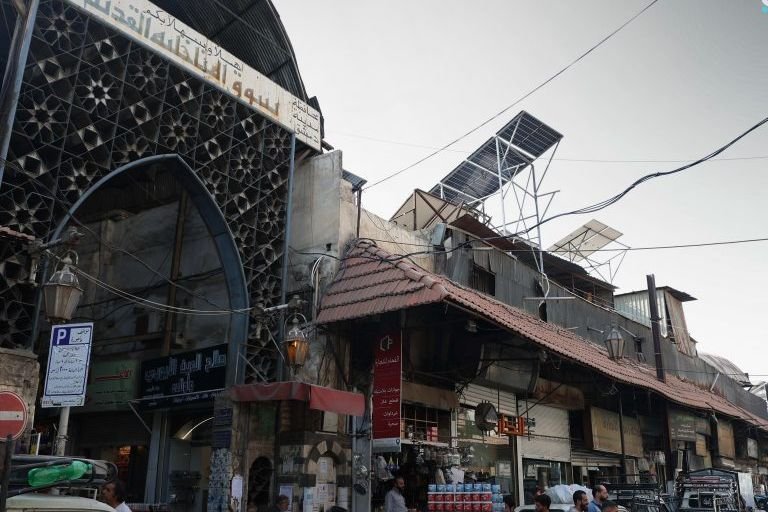
The stones and alleys of Old Damascus hold memories that extend beyond mere architecture, preserving a profound professional and social history that remains embedded in the city’s famous markets. The names passed down by generations of Damascenes—such as Al-Qabaqibiya, Al-Manakhiliya, Al-Jazmatiya, and Al-Sarujiya—are not merely geographical labels; they are historical markers of the pivotal role played by traditional handicrafts in shaping the city’s cultural and economic identity.
Researchers specializing in Damascene heritage explain that these market names were not chosen arbitrarily. Instead, they reflect the historical concentration of artisans and their specialization in specific areas within the city. Each market possessed a distinct character defined by its primary trade, a specialization that eventually solidified into a permanent identity for the location.
For instance, the ‘Al-Qabaqibiya’ market was not limited solely to the production of traditional wooden clogs (qabaqib). Its commercial activity expanded to include essential household tools for Damascene families, such as wooden mortars, kibbeh pestles, rolling pins, ‘namali’ food storage cabinets, and traditional bathroom stools.
In a similar vein, the ‘Al-Manakhiliya’ market reflects the productive diversity of Old Damascus. Here, artisans specialized in making sieves used for sifting flour and bulgur, as well as sorting legumes. In its early days, the industry relied on braided hemp fiber before the eventual introduction of metal wire. Meanwhile, the ‘Al-Jazmatiya’ market in the Midan neighborhood serves as a testament to the persistence of spatial memory. Although historically linked to the production of leather footwear and cloaks, it has transformed today into a destination for famous Damascene sweets. Despite the shift in goods, the name has endured, remaining a witness to the legacy of the craft that once defined the area.
Historical accounts indicate that these Old Damascus markets, some of which date back to the pre-Mamluk era, provided a living record of the city’s economic and social life. Beyond the aforementioned markets, industries such as agricultural tools, blacksmithing, and copperware thrived, alongside other specialized hubs like the Al-Buzuriyah market (spices), the goldsmiths’ market, the silk market, and the Al-Hamidiyah market. This setup reflects a robust professional integration within the city’s economic fabric.
Despite the decline of certain traditional crafts due to industrial development, the cultural and historical value of these markets remains intact. Heritage experts view these names as an essential gateway to understanding how labor, crafts, and professional integration were organized in Damascus. They emphasize the importance of documenting these stories and introducing their significance to younger generations, ensuring these markets remain a living part of the Syrian identity, preserving the link between the location and its original artisanal roots.
Source: Syria Focus Arabic
