
Geophysical Study Launched to Inspect Rail Line Stability in Damascus
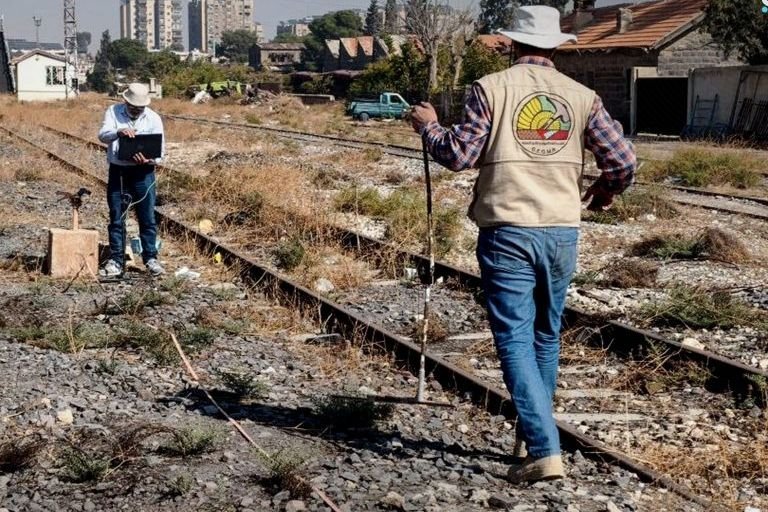
Technical teams from the General Establishment of Geology and Mineral Resources, in collaboration with the General Establishment of Syrian Railways, have launched an extensive field-based geophysical study. The operation focuses on the railway corridor spanning the distance between the Al-Asali area and the Qadam station in Damascus.
Covering an estimated distance of one kilometer, the project is part of ongoing efforts to preserve the integrity of infrastructure within the rail transport sector. According to data provided by the Ministry of Energy, the primary objective of this technical initiative is to conduct a precise survey to identify the presence of any tunnels or cavities that may exist beneath the rail tracks.
The study utilizes specialized geophysical technologies capable of detecting the location, extension, and dimensions of such voids with high accuracy. These data points are essential for providing the technical parameters required to assess the geological and structural condition of the soil beneath the line.
These engineering activities are considered critical for enhancing safety measures across the rail network. The anticipated results will be used to verify the stability of the soil and the infrastructure supporting the tracks, thereby directly contributing to the mitigation of potential geological risks. This work serves as part of a national strategy aimed at ensuring the safety of train traffic and the long-term operational continuity of the railway network.
The Ministry of Energy underscored the ongoing role of the General Establishment of Geology and Mineral Resources in applying its technical and field expertise to support national projects. The ministry noted that these activities fall under the establishment’s mandate to evaluate geological formations and conduct soil studies.
As the entity responsible for geological research and mineral resource exploration, the General Establishment of Geology and Mineral Resources serves as a key technical advisory body. It plays a pivotal role in assessing natural resources and contributing to soil stability studies across various Syrian governorates.
This initiative reflects a broader commitment to protecting national infrastructure through scientific research, particularly in areas characterized by high railway activity or those that require periodic assessment to ensure the efficiency and safety of vital public sector facilities.
Source: Syria Focus Arabic
