
Kessab Apple Season Faces Sharp Decline and Financial Strain
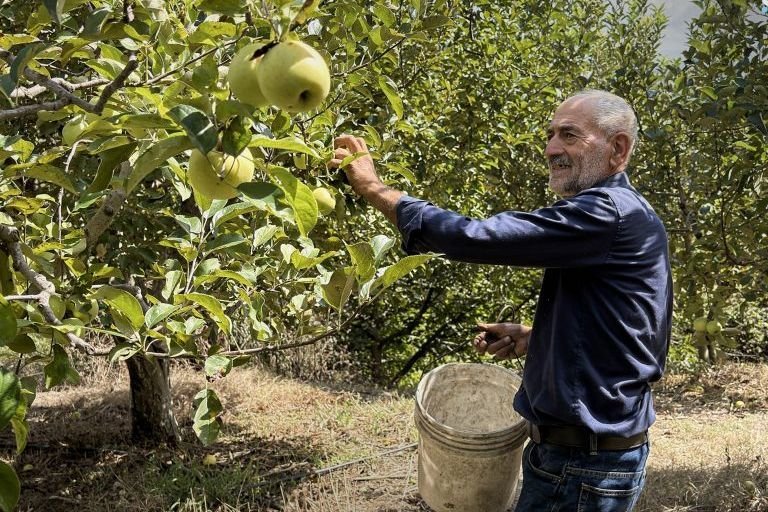
The apple farming sector in the town of Kessab, located in the Latakia countryside, is facing exceptional challenges during the current season. Farmers have reported a marked decline in production volumes, compounded by a sharp increase in the costs of production inputs and agricultural services, which has significantly eroded financial returns.
Hakima Marwa, head of the Kessab Agricultural Extension Unit, stated that weather conditions were a primary driver of the reduced harvest. Heavy rainfall during the trees’ flowering period hindered natural pollination, while subsequent heatwaves caused a portion of the blossoms to dry out. Marwa also noted that the current season saw a widespread outbreak of agricultural pests and diseases, including mites, apple scab, codling moths, and woolly aphids. These issues forced farmers to bear additional costs related to intensive spraying and the use of pesticides to maintain the quality of the remaining fruit.
Farmer Esteban Sheikhukian highlighted that the challenges extend beyond environmental factors to include high operational costs, particularly labor wages, which have become a heavy burden. The daily cost for a single worker during pruning can reach 200,000 Syrian pounds, while picking labor costs around 100,000 pounds per day. These expenses leave farmers with a very limited profit margin that does not align with the physical and financial effort invested throughout the season.
Data from the Kessab Agricultural Extension Unit reflects the severity of the decline, with total production dropping from 6,000 tons last season to approximately 3,000 tons this year across the region’s 150,000 apple trees. Farmers are further strained by the wide disparity between farm-gate prices and retail prices in the market. While farmers sell their produce for between 5,000 and 10,000 Syrian pounds per kilogram depending on quality, the price for the end consumer reaches between 15,000 and 25,000 pounds—a gap that farmers view as unjust.
To address these obstacles, stakeholders are calling for the Agricultural Bank to provide facilitated loans to help farmers secure necessary supplies. Additionally, there is an urgent demand to rehabilitate the regional cold storage facility, which has been out of service for years. This would enable farmers to store their crops and release them during periods of high demand, rather than being forced to sell immediately after harvest at low prices due to market supply fluctuations.
Source: Syria Focus Arabic
