
Kafr Halab Health Center Reopens in Western Aleppo Countryside
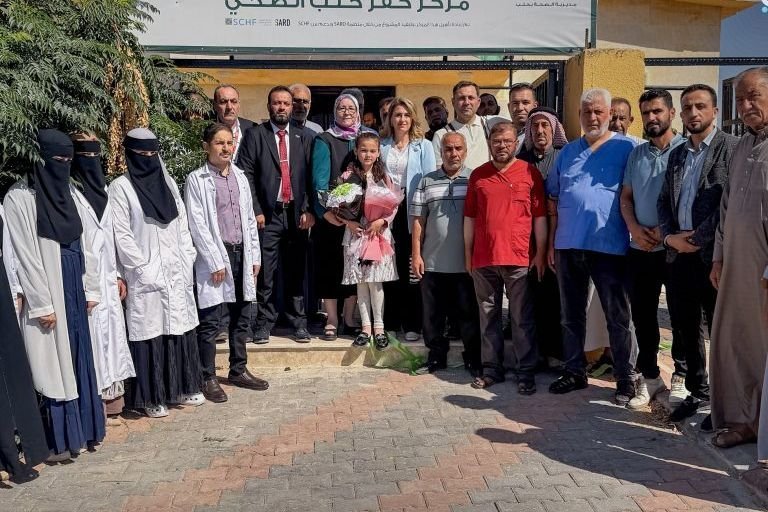
The Aleppo Health Directorate has announced the official reopening of the Kafr Halab health center in the western countryside of Aleppo. The facility has resumed full operations after the completion of extensive restoration and equipping works, allowing it to once again provide essential medical services to the local population.
This initiative is part of ongoing efforts by the Syrian Ministry of Health and the Aleppo Health Directorate to reactivate primary healthcare centers in rural and remote areas. The project aims to facilitate easier access to basic medical services for residents, sparing them the burden of traveling long distances for care.
Abdullah Abdul Bari, Director of the Primary Health Care Department in Aleppo, stated that the facility is classified as a Category “A” health center. He noted that the building underwent a comprehensive restoration over the past several months to address significant damage sustained previously. The center is now fully prepared to receive patients, offering services in general medicine, pediatrics, vaccination, and nutrition. It also features a fully equipped pharmacy. The center is expected to serve approximately 15,000 people living in the village of Kafr Halab and the surrounding areas.
Ikhlas Fattal, Assistant Director of Aleppo Health for Medical Affairs, emphasized that the rehabilitation was achieved through close cooperation between health authorities, the local community, and supporting organizations, most notably the Syrian Foundation for Relief and Development (SARD). She explained that the center’s services extend beyond basic care to include family planning programs and the management of chronic diseases, managed by specialized medical staff dedicated to improving healthcare quality in the region.
Abdul Rahman Al-Haj Bakr, head of the Atarib health district, added that plans are already underway to further enhance the center’s services in the near future. These developments will include the addition of new departments, such as a leishmaniasis clinic and a referral unit, to ensure a comprehensive range of medical services for the public.
Abdul Hamid Bakour, Executive Director of the Syrian Foundation for Relief and Development, noted that the foundation conducted a thorough assessment of the area’s needs before commencing the rehabilitation work, ensuring all upgrades met the standards set by the Ministry of Health. He highlighted that the center acts as a vital health hub, playing an important role in supporting the stability of families returning from displacement by meeting their primary health needs as part of the early recovery projects implemented by the foundation in the Atarib area.
Mohammed Shweideh Hussein, the mukhtar of Kafr Halab, expressed the community’s gratitude for the achievement. He pointed out that the center had previously suffered severe damage to its infrastructure, including flooring, windows, and sewage networks, which had compounded the hardships faced by residents given the distance to the nearest hospitals. This opening follows a series of health projects across the governorate, including the opening of a health center in the town of Jazraya in the southern Aleppo countryside last July, reflecting a clear commitment to strengthening medical infrastructure in rural Aleppo.
