
Government and NGO Partner to Rehabilitate 1,000 Homes in Hama
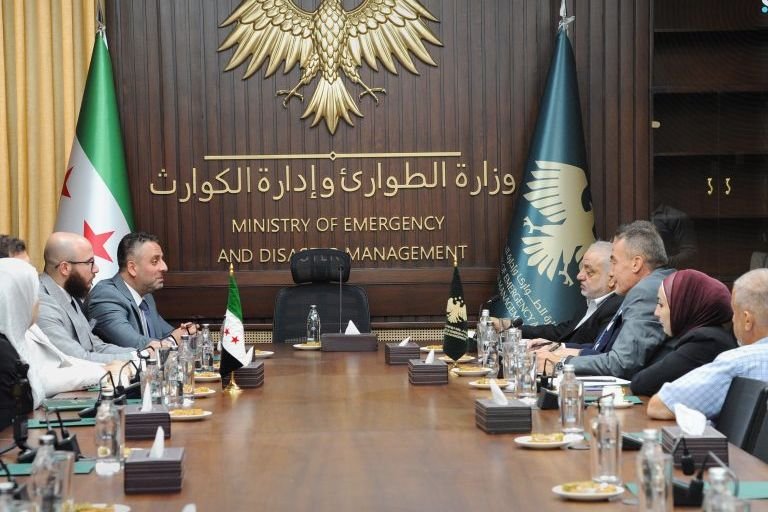
The Syrian Ministry of Emergency and Disaster Management held discussions this week with the executive leadership of the Rahma Billa Hudood (Mercy Without Borders) organization to review the progress of a key infrastructure project in Hama province. The initiative, which focuses on the rehabilitation of 1,000 homes, serves as a cornerstone of the broader national strategy aimed at eliminating the need for camps and facilitating a sustainable return for displaced persons.
Ahmed Aqzeez, Assistant Minister of Emergency and Disaster Management, emphasized that the project reflects a critical collaborative model between government institutions and civil society organizations. This partnership is designed to restore essential infrastructure in areas impacted by the ongoing conflict, providing a dignified and secure environment for families to return to their communities.
According to ministry data, the government has identified 3,344 communities where internally displaced persons are currently living in northern camps. A unified vision and a comprehensive database have been established to monitor and prioritize these areas based on population density, the volume of returnees, and the level of vulnerability in each location. The current efforts in Hama represent a tactical rollout of this plan, with 121 priority regions identified for initial intervention, to be followed by 293 subsequent locations. The Ministry is utilizing a real-time digital platform to track the progress of these projects, log specific regional needs, and ensure that data is updated continuously to maintain an efficient workflow.
Ammar Bani al-Marja, Executive Director of Rahma Billa Hudood, detailed the technical scope of the Hama project, noting that it involves both the full rehabilitation and the completion of partially constructed housing units. The project is focused specifically on the Sahl al-Ghab area, with work spanning across various villages under the Qal’at al-Madiq and al-Ziyara sub-districts. The organization has set an implementation timeline of approximately one year to complete the 1,000 homes.
Beyond the housing initiative, the organization is also engaged in broader community support efforts in the same region. This includes the rehabilitation of educational facilities, such as local schools, and the restoration of vital public utilities, specifically water and sewage networks. These efforts align with the broader national directives issued by President Ahmed al-Sharaa earlier this year. In March 2026, a presidential decree was issued mandating the formation of a specialized committee, chaired by the Minister of Emergency and Disaster Management, tasked with the systematic preparation of infrastructure in damaged regions to enable the return of local populations.
Rahma Billa Hudood, a non-profit humanitarian organization, maintains a significant operational presence across Syria. Its core mission focuses on poverty alleviation, emergency relief, and community empowerment, with a specific emphasis on providing health, education, and food security services to orphans and women in vulnerable communities, ultimately striving to foster local self-sufficiency.
