
Deir ez-Zor Agriculture Directorate Concludes Project Management Course
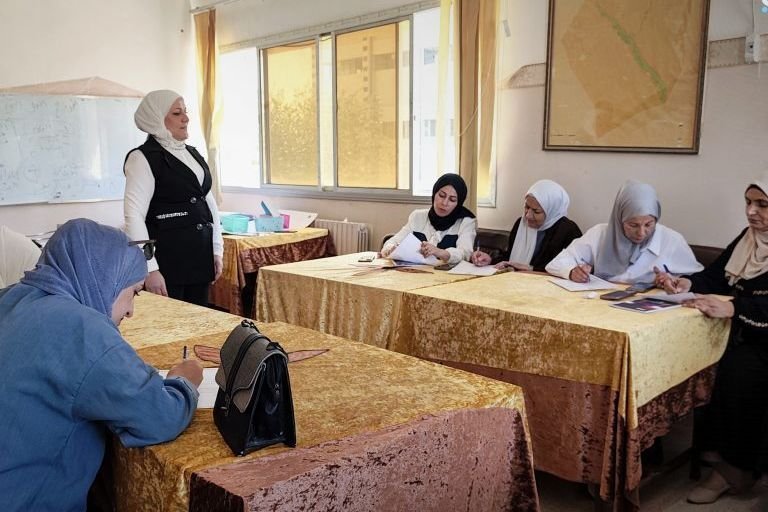
The Agricultural Training and Education Division at the Deir ez-Zor Agriculture Directorate concluded a five-day intensive training course on professional project management this Thursday. The program saw participation from a select group of engineers and technicians working within the directorate.
Launched last Sunday, the training aimed to equip staff with essential skills required for efficient and effective project management. The curriculum covered core subjects, including resource management, time and cost control, risk management, and human resources strategies tailored to the agricultural work environment.
Faten Al-Ahmed, Head of the Agricultural Training and Education Division, stated that the program focused on modern project management concepts. The training spanned from defining various types of projects to the mechanics of preparing feasibility studies and comprehensive work plans. Al-Ahmed noted that participants acquired practical skills to oversee projects—whether small or medium-sized—from the initial planning and execution phases through to project closure. A key focus was placed on the critical factors for success: maintaining the balance between time, cost, and quality.
Alia Al-Hamash, Head of the Agricultural Extension and Rural Development Department, explained that this course is part of the directorate’s annual training plan. This plan encompasses three main divisions: extension planning, rural development, and agricultural training and education. Al-Hamash emphasized that the department follows a systematic approach intended to enhance the proficiency of agricultural extension workers across various units in the province.
Looking ahead, Al-Hamash outlined the schedule for upcoming courses slated for the remainder of the year. These sessions will cover specialized topics, including integrated management for wheat, cotton, and yellow corn crops. Additional training modules will be offered in computer leadership skills, training-of-trainers programs, the implementation of field farmer schools, and the foundations of extension work. To ensure training quality and maintain a focus on practical and field-based applications, each course will accommodate between 15 and 20 participants.
