
Daraa: Grain Silo Rehabilitation Underway to Boost Capacity in Nawa
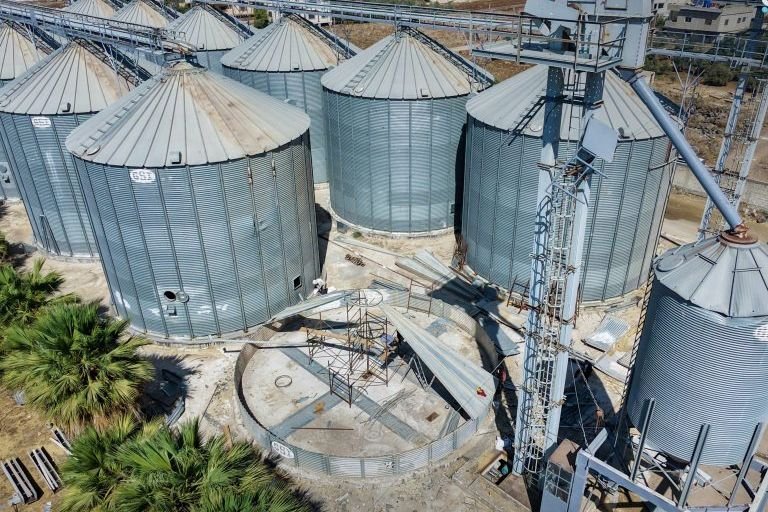
The Syrian Grain Establishment’s branch in Daraa governorate announced on Sunday the commencement of rehabilitation work on the sixth silo at the Nawa grain center, located in the western countryside of the governorate. This project is part of ongoing efforts to enhance the facility’s storage capacity and restore its full operational functionality.
The sixth silo collapsed last July during the grain marketing season while storing approximately 700 tons of wheat. Technical investigations conducted by a specialized committee attributed the collapse to the intense pressure exerted by the volume of grain inside the unit. The assessment identified an underlying defect in the metal plating of the silo’s structure, which led to the unit being temporarily removed from service.
Ahmed Al-Oudat, head of the Nawa grain center, stated that the maintenance and rehabilitation efforts extend beyond the silo’s structure. The work also includes repairs to the wheat loading conveyor belt, which was damaged during the incident. Al-Oudat confirmed that the work is progressing at an accelerated pace, with the silo scheduled to return to active service within ten days. Once operational, the restored unit will improve the center’s ability to receive and store wheat from local farmers, ensuring a more efficient supply chain for the harvested crop.
The Nawa grain silo is considered a vital facility for the region, boasting a total storage capacity of approximately 10,000 tons of wheat. It holds strategic importance as the primary center providing storage and marketing services for farmers in the city of Nawa and its surrounding areas in the Daraa countryside. Consequently, regular maintenance and the current rehabilitation efforts are regarded as essential to supporting the local agricultural sector and maintaining a strategic grain reserve.
These initiatives are part of the Syrian Grain Establishment’s broader plans to maintain storage centers across various governorates. The strategy aims to overcome technical obstacles facing critical facilities, thereby ensuring the preservation of strategic crops and streamlining marketing operations for the upcoming agricultural season.
Source: Syria Focus Arabic
