Damascus University Seeks to Strengthen Ties Between Science and Industry
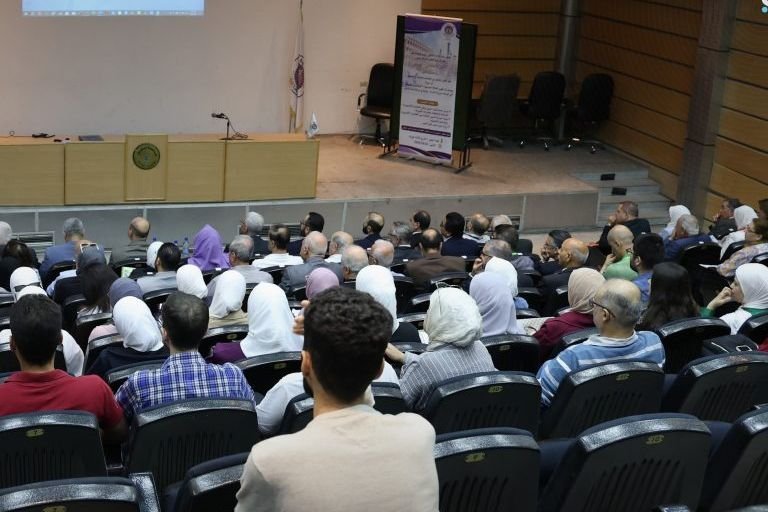
The Faculty of Science at Damascus University, in collaboration with representatives from Syria’s industrial and applied sectors, recently organized an academic-industrial forum at the university’s Physics Department. The event aimed to enhance the role of scientific research in supporting national industry and meeting current development requirements, particularly within the context of reconstruction efforts.
The forum evaluated the current state of academic-industrial relations and explored proposals to ensure greater synergy between research and production. Key discussions focused on strengthening cooperation, with participants proposing the formation of a permanent liaison committee between the academic and industrial sectors. Additionally, the proposal to establish a mining engineering department at Damascus University was introduced to supply the labor market with required specialized personnel. Attendees also conducted field tours of the faculty’s laboratories to evaluate their capacity for supporting industrial innovation.
On the sidelines of the forum, Damascus University signed a memorandum of understanding with the General Establishment for Geology and Mineral Resources. The agreement centers on fostering collaboration in research and laboratory operations, facilitating the exchange of expertise, and implementing specialized training programs for students to refine their professional skills and improve their integration into the labor market.
Mustafa Saim Al-Dahr, President of Damascus University, emphasized that the Faculty of Science plays a central role in scientific research, producing approximately 80 research papers and dozens of postgraduate theses annually. He highlighted the university’s commitment to utilizing these capabilities to advance the national industry and achieve sustainable management of local resources.
Abdul Rahim Ziyada, Head of the Rif Dimashq Chamber of Commerce, noted that integrating knowledge with practical expertise is essential for building a robust economy. He explained that partnerships between universities and chambers of commerce and industry help address production challenges, drive product development, improve quality, and promote energy efficiency. Ziyada encouraged transforming industrial challenges into graduation projects and applied research, while also expanding practical training opportunities for students.
Siraj Al-Hariri, Director of the General Establishment for Geology and Mineral Resources, underscored the vital role of the Faculty of Science as a foundation for building qualified cadres. He stated that the mining sector acts as a driver for sustainable development by converting scientific knowledge into economic value that supports industry and attracts investment.
Abdul Nasser Dorkal, Dean of the Faculty of Science, described these forums as a bridge for academic-industrial cooperation. He noted that the initiative aims to raise the standard of graduates and align scientific research with labor market demands, emphasizing that this direction aligns with the faculty’s strategic plan to apply basic sciences to serve society.
The forum also featured an exhibition of student projects, including innovations from the Nano Lab and departments of chemistry, plant biology, environmental science, and geology. The event was attended by delegations from the Ministry of Industry, the Ministry of Local Administration and Environment, chambers of industry and commerce, and representatives from oil and chemical companies.
Source: Syria Focus Arabic
