
Damascus Hosts Workshop to Reduce Cesarean Section Rates
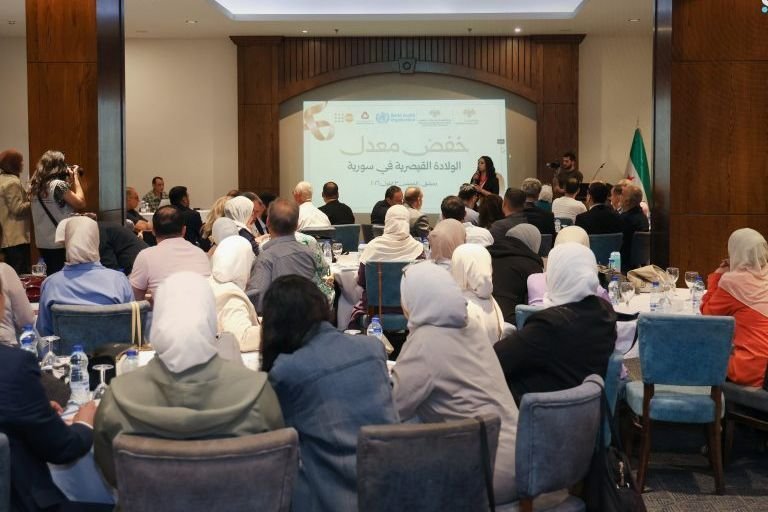
The Syrian Ministry of Health has organized a specialized workshop in Damascus to discuss and formulate a national plan aimed at reducing cesarean section rates across the country. The initiative, which seeks to improve the quality of maternal and neonatal healthcare services, saw the participation of the United Nations Population Fund (UNFPA), the Aga Khan Health Services, the World Health Organization (WHO), and various international organizations.
During the workshop, participants reviewed the current status of cesarean section rates and the factors driving their increase. Dr. Alaa Arqasousi, head of the Reproductive Health Department at the Ministry of Health, noted that these rates have risen significantly over the past 14 years. She attributed this trend to the challenging conditions the country has faced, which have impacted access to healthcare services and the availability of medical equipment. Data presented at the workshop indicates that cesarean delivery rates in the public sector currently range between 55 and 60 percent, while rates in the private sector exceed 80 to 90 percent.
Assistant Minister of Health, Hussein Al-Khatib, emphasized that the Ministry aims to curb medically unnecessary cesarean sections while maintaining that the procedure remains a life-saving intervention when medically indicated. Al-Khatib explained that the high rates are linked to a complex array of clinical, organizational, professional, economic, legal, and social factors. He highlighted the necessity of a comprehensive response that includes standardizing clinical guidelines, enhancing the skills of medical staff in managing labor and natural birth, and increasing community awareness.
Boutcha Mourabet, representative of the UNFPA in Syria, pointed out that the global average for cesarean sections is approximately 21 percent, with projections suggesting it could reach 30 percent by 2030. He stressed that medically unjustified increases do not provide additional benefits in reducing maternal and neonatal mortality and, conversely, may expose mothers to surgical risks and future complications. He advocated for the classification of deliveries based on WHO standards and the strengthening of the role of skilled midwives.
Dr. Caroline Clarinval, WHO representative in Syria, reaffirmed the organization’s support for the Ministry of Health in developing a strategic roadmap focused on ensuring safe births and providing high-quality maternal care. Additionally, Dr. Housn Seifo of the Aga Khan Health Services noted that the foundation has been working on this issue since 2019 in collaboration with partners to reduce neonatal and infant mortality by lowering the rates of non-indicated cesarean sections.
This workshop is part of a series of projects launched by the Syrian Ministry of Health, including the initiative to strengthen the midwifery profession introduced last June, reflecting the Ministry’s commitment to building an advanced health system that prioritizes maternal and newborn health.
