
British Expert Proposes Roadmap for Syria’s Banking Sector Reform
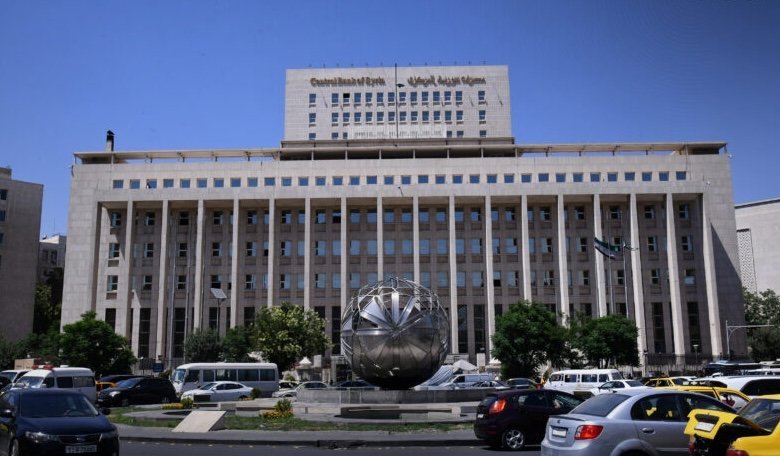
Syria stands at a pivotal juncture, presenting a unique opportunity to rebuild its financial system from the ground up on modern, robust foundations rather than relying on outdated, inefficient structures.
In less than a year, the international isolation that constrained the country for over a decade has significantly diminished. Washington has repealed the Caesar Act and lifted primary sanctions, while Syria has regained diplomatic standing following the removal of UN Security Council restrictive measures. In the banking sector, the Central Bank of Syria has reconnected to the global SWIFT network, restoring its ability to process financial messaging after a 14-year hiatus. This development coincides with the establishment of new correspondent channels with the Central Bank of Turkey, high-level discussions with major American institutions regarding dollar clearing, and the issuance of new Syrian Lira denominations. Furthermore, in August, the World Bank approved a $100 million grant specifically aimed at modernizing Syria’s financial sector.
Despite these positive shifts, the country faces immense challenges. World Bank estimates place the cost of Syria’s reconstruction at over $200 billion—ten times the current GDP. With an ineffective domestic credit system, remittances from the Syrian diaspora, totaling approximately $4 billion annually, serve as the primary source of foreign currency for households. The domestic banking sector remains fragile and undercapitalized as it re-enters the global financial system.
Simon Toplim, founder and chairman of REALIS Finance—a firm specializing in digital banking infrastructure—argues that the volume of capital required for reconstruction will not wait for traditional banking systems to be rebuilt using legacy methods. He posits that Syria should bypass the fragmented reconstruction of traditional correspondent banking in favor of a modern digital financial infrastructure. Because the country has been absent from international finance for 14 years, it possesses a “blank slate” that allows for the creation of an entirely new financial experience.
Syrian financial authorities appear to recognize this shift. The Central Bank has introduced licensing for electronic payment and clearing companies, while new laws concerning banking secrecy, anti-money laundering, electronic transactions, and digital signatures have been enacted. In August, a presidential decree adopted a national framework for electronic payments and digital transformation, aiming to foster fintech investments while maintaining cash circulation.
Toplim emphasizes that successful transition hinges on proper “procedural sequencing.” He warns against building a closed local system only to attempt international integration later; instead, both must be designed in tandem. He proposes a four-layer roadmap:
1. Immediate International Connectivity: Implementing multi-currency institutional accounts and cross-border settlement mechanisms to handle diverse funding sources, including multilateral development banks and foreign investors, with built-in compliance and auditing capabilities.
2. Trust and Compliance Engineering: Utilizing AI-driven compliance tools for real-time monitoring and “Know Your Customer” (KYC) verification to provide international partners with the necessary assurances to engage with Syrian institutions.
3. Remittance Corridors: Establishing transparent and efficient digital pathways for the $4 billion in annual remittances, creating a clearing network that will underpin future trade finance.
4. Flexible Settlement Mechanisms: Adopting a hybrid model that blends traditional correspondent banking with regulated digital asset settlement, offering the banking sector faster, more pragmatic options.
Toplim concludes that these technological solutions act as a complementary layer under the sovereignty of the Central Bank. He notes that the legislative progress made in the last 18 months is remarkably fast by international standards, but warns that the sheer scale of reconstruction funding will necessitate adherence to global institutional standards from the outset.
