Aleppo Officials and Financial Audit Head Discuss Oversight Reform
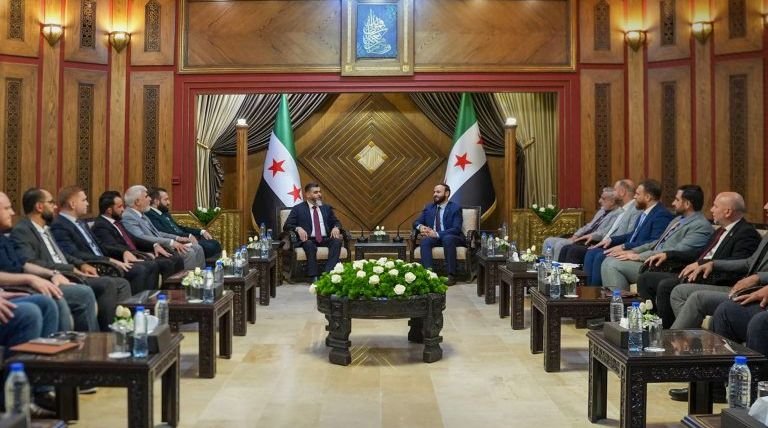
The Head of the Central Agency for Financial Inspection, Mohammed Omar Qadid, met with the Governor of Aleppo, Azzam Al-Gharib, on Monday to review the current state of financial oversight in the province and evaluate strategies for systemic improvement. The discussion focused on strengthening the role of regulatory bodies in supporting institutional performance and ensuring the protection of public funds.
According to the Central Agency for Financial Inspection, the meeting served as a platform to outline the agency’s future strategic roadmap. A core component of this transition involves moving away from traditional, reactive auditing methods toward a risk-based oversight framework. This shift is designed to optimize the efficiency of regulatory efforts, allowing the agency to prioritize its resources on areas identified as having the highest potential risk to public finances.
Addressing the root causes of financial irregularities and preventing their recurrence was a primary theme of the discussions. Both officials reviewed several specific case files and financial management scenarios, aiming to integrate these insights into a unified work plan for 2025. This proactive approach seeks to move beyond merely reporting violations, focusing instead on establishing robust mechanisms to mitigate risk at the source and improve long-term institutional accountability.
During his visit to the province, Qadid reaffirmed the agency’s commitment to providing comprehensive technical support to local administrative bodies. This assistance is intended to bolster financial management capacities and elevate transparency standards across public institutions in Aleppo. The agency noted that this technical collaboration is vital for modernizing administrative operations and ensuring that financial oversight effectively contributes to the overall stability of the public sector.
Governor Al-Gharib emphasized the strategic importance of this coordination, noting that local authorities are eager to utilize the findings from the agency’s inspections to refine and improve internal administrative and financial performance. He underscored that effective oversight serves as a cornerstone for enhancing the quality of institutional work and safeguarding the integrity of the state’s resources.
The visit is part of a broader, centralized push by the financial oversight authority to establish direct, consistent communication with provincial governments and executive bodies across Syria. By engaging directly with local stakeholders, the agency aims to ensure that its regulatory functions serve as a constructive tool for performance correction and structural improvements within government institutions. This ongoing dialogue is viewed as essential for fostering a culture of fiscal responsibility and professional excellence in the public sector, as both parties look toward the implementation of more rigorous, risk-informed audit methodologies in the coming year.
