
Syrian and Jordanian Foreign Ministers Discuss Regional Cooperation
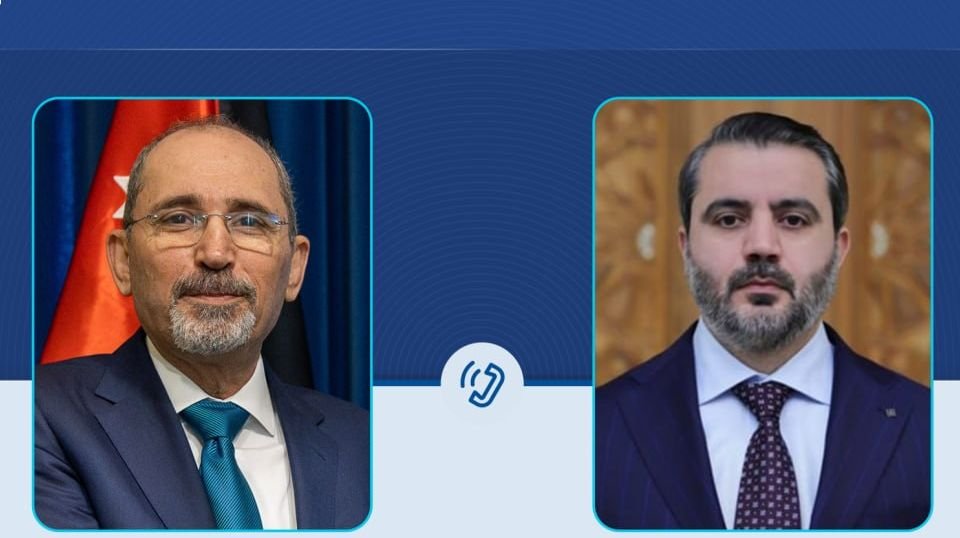
Syrian Foreign and Expatriates Minister Asaad Hassan al-Shaibani and the Deputy Prime Minister and Minister of Foreign Affairs and Expatriates of the Hashemite Kingdom of Jordan, Ayman Safadi, held a formal phone conversation on Sunday to discuss ongoing diplomatic coordination between the two nations. The primary focus of the discussion was the progress of the Higher Coordination Council, the institutional framework established to manage and enhance bilateral relations.
During the conversation, the two ministers reviewed the latest regional developments and the evolving situation in the Middle East. Both sides emphasized the necessity of maintaining consistent consultation and coordination to address common challenges. This ongoing dialogue is aimed at supporting broader efforts to foster and maintain security and stability across the region.
The diplomatic engagement underscores the continued importance of the Higher Coordination Council, which serves as a central mechanism for aligning policies and integrating efforts across various sectors of governance. The Council facilitates structured, recurring meetings between high-level officials from both governments every six months to monitor bilateral progress and oversee the implementation of collaborative agreements.
The foundation of this institutionalized cooperation was further solidified earlier this year. In April, the second session of the Higher Coordination Council concluded in Amman, the capital of Jordan. That meeting, chaired by Minister al-Shaibani and Minister Safadi, involved a large delegation of 30 ministers from both countries, reflecting a significant commitment to strengthening cross-border institutional ties.
Since its inception in May 2025, the Higher Coordination Council has been tasked with streamlining interaction between Syria and Jordan. Through this framework, specialized committees are empowered to follow up on the outcomes of ministerial-level discussions, ensuring that the bilateral agenda remains productive and responsive to the needs of both countries. The recent phone call between the two foreign ministers serves as a continuation of this established process of regular communication, reinforcing the commitment to bilateral stability and regional cooperation at the highest levels of government.
