Syrian Calligraphy Forum Explores History of Arabic Script
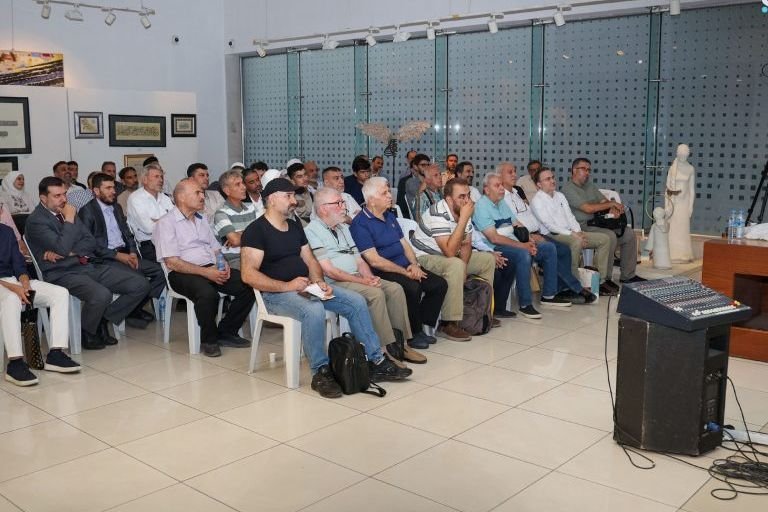
The Syrian Forum for Arabic Calligraphy and Decoration is continuing its current session with a focus on the deep historical roots and stylistic development of Arabic script. The event, held at the Center for Visual Arts in Damascus, features a series of educational lectures and workshops aimed at preserving and promoting this foundational art form.
As part of the program, calligrapher Adham Fadi al-Jaafari delivered a comprehensive lecture titled “Illuminations on the History of Arabic Calligraphy.” During his presentation, al-Jaafari guided participants through the trajectory of written communication, tracing its evolution from its earliest inception to the establishment of the refined rules that govern Arabic calligraphy today.
Al-Jaafari explored the emergence of writing around 3200 BC, characterizing the invention of the written word as a pivotal moment in the development of civilization. He detailed the progression of writing systems, moving from early pictographic representations to symbolic forms, and eventually to phonetic structures. He highlighted the significant contributions of the Sumerian, Aramaic, and Phoenician civilizations, noting that the development of the alphabet represented a transformative milestone in human history.
Focusing on the specific evolution of the Arabic language, al-Jaafari underscored its profound connection to the Holy Quran. He explained that Arab tribes from the north adapted characters from the Saban kingdom and earlier regional alphabets, tailoring them to the requirements of the Arabic language. He noted that while basic literacy was present in Mecca during the early Islamic period, the formal act of writing was specialized. With the revelation of the Quran, the Prophet Muhammad prioritized the documentation of verses, which led to the emergence of the earliest forms of Arabic script, including the Yabis, Hijazi, and Madani styles.
The lecture also detailed the evolution of the codification of the Quran in the decades following the Prophet, covering the transition from the unpointed ‘Sahifa’ compiled during the time of Abu Bakr al-Siddiq to the linguistic advancements of the Umayyad period. Significant figures like Abu al-Aswad al-Du’ali and the scholar Khalil ibn Ahmad al-Farahidi were credited with establishing essential grammatical markers, phonetic pronunciation rules, and the first Arabic dictionary, ‘Al-Ayn’. These contributions, which involved formalizing the use of dots and diacritics, were essential in stabilizing the Arabic writing system by 170 AH.
Furthermore, the session highlighted the flourishing of Arabic calligraphy during the Umayyad era, citing the intricate inscriptions in the Umayyad Mosque as a testament to the period’s artistic sophistication. Mention was made of Khalid ibn Abi al-Hayyaj, recognized as the first specialist to dedicate himself to the art of calligraphy, notably transcribing Quranic verses in gold. The lecture concluded with an examination of the ‘Six Pens’ of the Abbasid era and the fundamental rules of proportioning developed by the master Ibn Muqla, which remain standard in the study of scripts such as Muhaqqaq, Thuluth, and Naskh. The forum, which serves as an important hub for cultural and artistic discourse, will continue its activities in Damascus through August 15.
