
Aleppo University Hosts Lecture on the Cultural Significance of Ebla
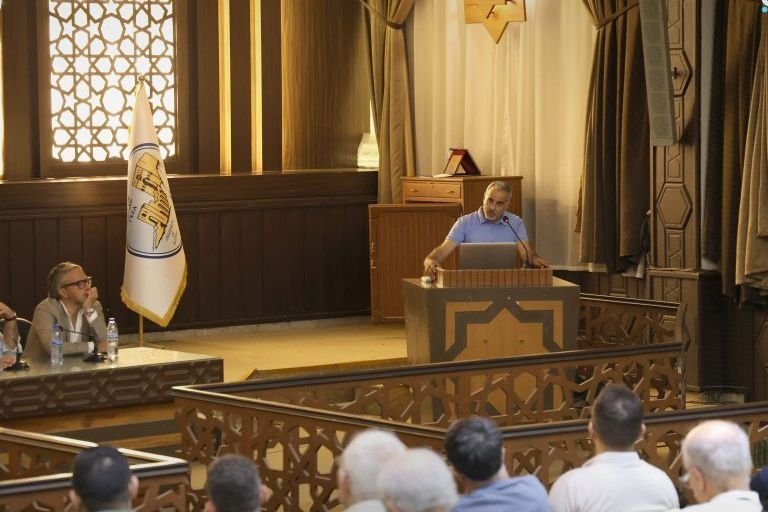
Aleppo University recently hosted a scientific lecture titled “The Ebla Empire Reborn,” organized in cooperation with the Sour Association and the Institute for the History of Arabic Science. The event featured presentations by archaeological researchers from Italy’s Sapienza University, as well as members of the Italian archaeological mission working at the Tell Mardikh site.
The lecture highlighted the profound historical and cultural importance of the Kingdom of Ebla, one of the most prominent ancient urban centers in Syria and the wider region. Speakers reviewed key scientific findings unearthed by archaeological missions at the site since excavations first began in 1964. They emphasized Ebla’s pivotal role in ancient Syrian history during the third millennium BC, particularly noting the discovery of an archive of cuneiform tablets that provided extensive historical data regarding the city’s political and administrative structure.
During the session, Dr. Davide Nadali, the excavation leader for the Italian mission, announced the launch of a new project aimed at restoring damaged archaeological monuments at the site. He indicated that the work is scheduled to commence at the beginning of next year in collaboration with the Directorate-General of Antiquities and Museums. The project aims to rehabilitate the site and transform it into an open archaeological park for visitors, ensuring the preservation of Syrian cultural heritage while preparing the site to attract tourism and academic research.
Dr. Abdul Wahab Dahdouh, a faculty member at Aleppo University, underscored the importance of such seminars in introducing students and the academic community to their cultural heritage and fostering scientific dialogue. He stressed the need to intensify research efforts, monitor the damage sustained by Syrian archaeological sites, and develop comprehensive plans for their restoration and protection. Furthermore, he highlighted the vital importance of resuming and revitalizing the work of both international and local archaeological missions.
Syrian archaeologist Dr. Mohammed Al-Khaled explained that the forthcoming collaboration on the restoration project will involve broad participation from Syrian archaeologists, students, and researchers from the universities of Aleppo, Damascus, and Idlib. This initiative is designed to refine research skills and advance archaeological methodologies within Syria.
This scientific activity falls within ongoing efforts to strengthen academic and research cooperation in the field of archaeology. By documenting Syrian archaeological discoveries through sustainable local and international partnerships, the initiative aims to highlight Syria’s deep historical roots to the world and protect its longstanding legacy.
Source: Syria Focus Arabic
