
New Forage Plant Propagation Unit Opens in Raqqa Desert
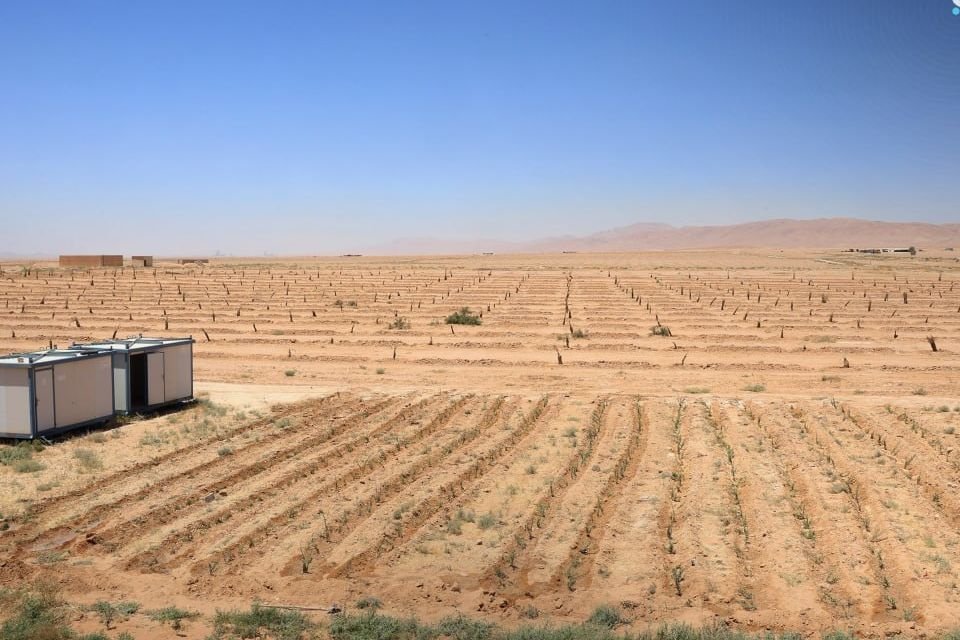
In a move aimed at enhancing livelihoods and developing livestock production in Raqqa Governorate, the Directorate of Agriculture inaugurated a specialized unit for the propagation of forage plants on Sunday. Located in the Al-Burjab area of the Raqqa desert (Badiya), the project is part of a collaborative framework between the Syrian Ministry of Agriculture and the CIHEAM Bari (International Centre for Advanced Mediterranean Agronomic Studies) in Italy. The initiative is designed to contribute to community stability and strengthen regional food security.
Mustafa Rahil, the official in charge of the forage nursery project, stated that the rehabilitation of the site included civil works and the installation of a comprehensive solar energy system for the guard room to ensure operational continuity. Rahil noted that the nursery is equipped with specialized sections for seedling production, hardening, and mother plant cultivation. These techniques are specifically employed to help the plants adapt to the harsh environmental conditions of the Syrian desert.
Regarding the facility’s current production capacity, Rahil indicated that the nursery holds approximately 22,500 forage seedlings. He emphasized the strategic importance of these plants, explaining that they serve a dual purpose: they stabilize sand dunes to protect the soil from desertification while simultaneously providing essential fodder for local livestock breeders, offering direct support to the region’s animal production sector.
Shaaban Shaaban, head of the Raqqa Forestry Department, underscored the environmental and developmental significance of the project. He highlighted the focus on propagating local plant varieties that are at risk of extinction and expanding their cultivation within forestry lands. According to Shaaban, these measures are primarily intended to restore natural vegetation in the desert and secure sustainable grazing and fodder resources for livestock.
The species currently being cultivated include drought-resistant plants such as wormwood (Artemisia), Syrian rue (Peganum harmala), and Ratha (Hammada). These plants are expected to open new opportunities for future expansion, contributing to the recovery of plant life across vast areas of the desert. This restoration will enhance the ability of breeders to utilize pastures, providing a positive impact on the livestock sector, which remains a fundamental pillar of the governorate’s local economy.
The project’s partner, CIHEAM Bari, is an international organization specializing in agricultural research, development, and education. With a membership of 13 Mediterranean countries, the organization works to support sustainable agricultural projects and the development of vital sectors throughout the region.
Source: Syria Focus Arabic
