Popular Heritage Magazine: A Window into Syrian Identity and Memory
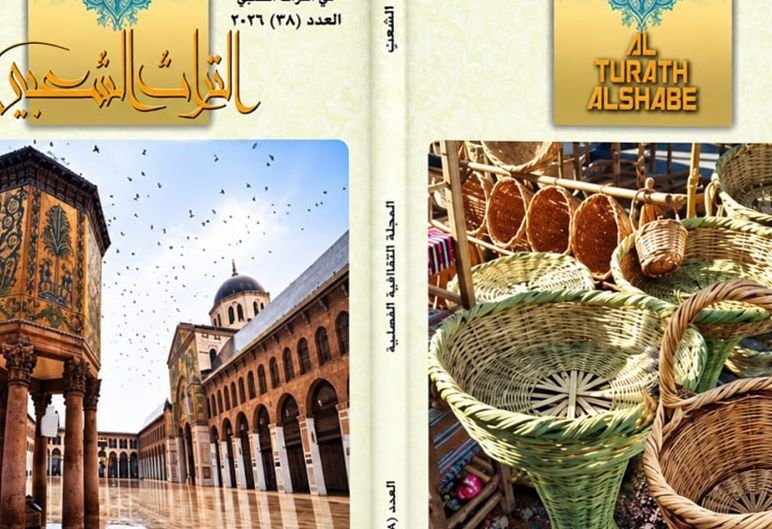
The 38th issue of “Popular Heritage” (Al-Turath al-Sha’bi) magazine, published by the Syrian Ministry of Culture’s Directorate of Intangible Heritage, has been released, offering an extensive exploration of the components of Syria’s intangible cultural legacy. The edition provides in-depth readings that intersect national identity with popular memory, emphasizing the significance of linguistic diversity, social rituals, and culturally rooted games as living witnesses to the Syrian people’s connection to their environment, history, and society.
Serving as a documentary reference for 2026, the issue asserts that folklore is not merely a relic of the past, but an active element in the present. It highlights how heritage contributes to strengthening social cohesion and shaping national identity. In his editorial, “Intangible Heritage as a Cultural Bridge for National Cohesion,” Minister of Culture Muhammad Yassin Al-Salih underscores the importance of this heritage in consolidating the concept of coexistence. He further emphasizes the responsibility of cultural institutions to develop documentation tools and ensure that heritage remains accessible to society, thereby guaranteeing its continuity in the public consciousness of future generations.
This edition includes a diverse array of sections documenting the richness of Syrian culture. In the “Syrian Intangible Heritage” section, researchers examine varied topics, including Syrian chess, local dialects, Damascene proverbs, rain-related rituals, and the arts of Ataba and Mejana, as well as the role of smart media in preserving this legacy. The “Damascus” section focuses on the spatial memory of the capital, covering prominent landmarks such as the Umayyad Mosque, the history of Damascus’s water supply, and the stories behind the doors of old houses.
Readers are also taken on a “Journey through the Heritage of the Governorates,” which highlights the unique cultural characteristics of each region. Features include the traditional costumes of Aleppo, the narratives of Jabal al-Arab, the traditional crafts of the coast, as well as the songs and arts of the Euphrates region and the heritage of the occupied Syrian Golan.
The magazine concludes with a “Miscellany” section that explores the memory of Syrian villages and ancient crafts, followed by the “Last Word” segment by Dr. Nizar Abaza. In this concluding piece, Dr. Abaza focuses on deeply ingrained social values, such as the preservation of blessings (Hifz al-Ni’ma), evoking ancient traditions that reflect the depth of the social and cultural memory of the people of the Levant.
The publication of this issue serves as a renewed invitation to engage with and understand Syrian heritage as a bridge connecting the past to the present. It stands as a vital source for strengthening national belonging, reflecting an urgent need to protect these cultural elements from erosion and ensure they remain vibrant in the conscience of Syrian society.
Source: Syria Focus Arabic
