
Syria’s Ministry of Agriculture Sets Cotton Purchase Price for 2026
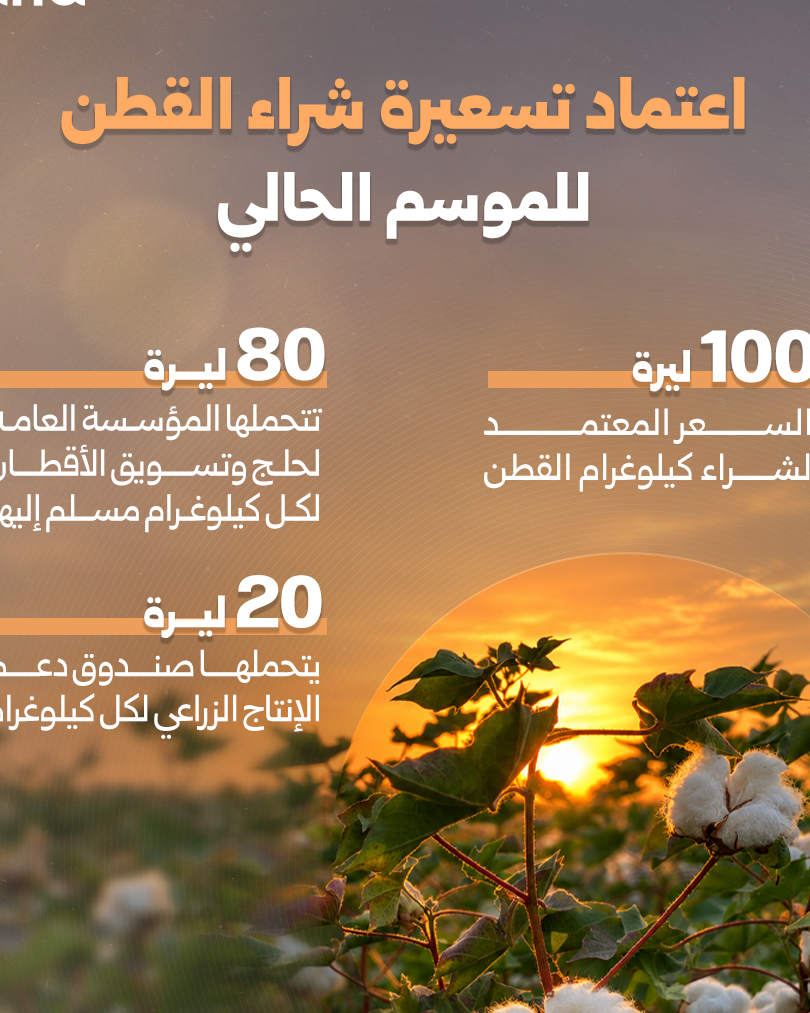
The Syrian Ministry of Agriculture has officially established the purchase price for the cotton harvest for the 2026 season. This decision is part of the government’s ongoing efforts to support the agricultural sector and organize the marketing of strategic crops.
According to the official decree issued by the ministry, the purchase price has been set at 100 new Syrian pounds per kilogram for cotton delivered by farmers. This measure is intended to ensure the stability of the production process and provide necessary incentives for farmers to maintain the cultivation of cotton, which remains a cornerstone of the Syrian agricultural economy.
The ministry clarified that the procurement of the harvest will be managed through a joint financing mechanism involving the General Organization for Cotton Ginning and Marketing and the Agricultural Production Support Fund. This collaboration aims to streamline the financial procedures required to collect the crop from farmers across various Syrian provinces known for cotton production. Furthermore, it ensures that farmers receive their financial dues through established official channels.
Through this initiative, Syrian authorities aim to strengthen the integration between institutions involved in the agricultural sector. The General Organization for Cotton Ginning and Marketing plays a pivotal role in receiving the harvest and preparing it for the textile and manufacturing industries. Concurrently, the Agricultural Production Support Fund contributes the necessary financial backing to compensate farmers and subsidize production costs, helping to sustain this vital sector despite current economic challenges.
In Syria, cotton is considered a strategic crop that bridges the gap between the agricultural and industrial sectors. By establishing prices in advance, the government aims to provide farmers with a clear outlook on the viability of the season, which in turn assists in agricultural planning and contributes to the stability of national production.
Source: Syria Focus Arabic
