
Syrian Industrial Research Center Reports Testing of 716 Samples
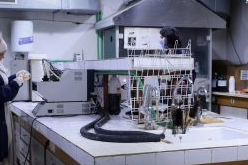
The Industrial Testing and Research Center, operating under the Syrian Ministry of Economy and Industry, has released its operational data for the first half of 2026, highlighting its ongoing role in maintaining national quality standards for industrial goods. According to the report, the center conducted technical evaluations on a total of 716 samples during the six-month period.
The findings, released in Damascus this week, underscore the diverse range of industries currently operating within the Syrian market. Of the total samples tested, 289 were confirmed to be in full compliance with established technical specifications. Meanwhile, 187 samples were identified as failing to meet required standards. A further 240 samples were categorized as “non-evaluated,” a designation applied to products where the testing process did not require a formal conformity judgment or was performed at the specific request of stakeholders for research purposes rather than regulatory approval.
In addition to product testing, the center has significantly expanded its capacity for technical support through its calibration services. During the first half of 2026, the facility issued 789 calibration certificates for various industrial devices and equipment. This represents a steady increase in activity, with 262 certificates issued in the first quarter and 527 in the second. These services are utilized by both public and private sector entities to ensure the accuracy and reliability of industrial machinery.
Director of the center, Moayad Al-Kwan, stated that the facility processes a wide array of goods across multiple sectors. The chemical industries division has been particularly active, handling food products, textiles, organic materials such as detergents and petroleum derivatives, cosmetics, and various inorganic substances including water samples, paints, and plastics. Simultaneously, the engineering industries department has focused on testing electrical and electronic equipment—such as electricity meters, heaters, cables, and batteries—as well as construction materials, most notably cement, to ensure they adhere to national quality benchmarks.
Al-Kwan emphasized that the center maintains a policy of impartiality and standardization, applying uniform testing protocols regardless of whether a product is locally manufactured or imported. The primary objective of these evaluations is to verify quality and adherence to established standards, thereby protecting the consumer and bolstering the competitiveness of domestic products.
Looking forward, the center is implementing a comprehensive modernization plan. This strategy includes upgrading laboratory infrastructure, integrating digital automation for sample tracking and reporting, and providing further training for technical staff. These efforts are aimed at aligning the center’s management systems with international standards, specifically the ISO/IEC 17025 requirements. Established in 1965, the center remains a vital institution for the regulation of the industrial sector in Syria, tasked with supporting national production and ensuring the safety and quality of goods entering the market.
