
Syrian Energy Minister Outlines Path to Oil Self-Sufficiency by 2028
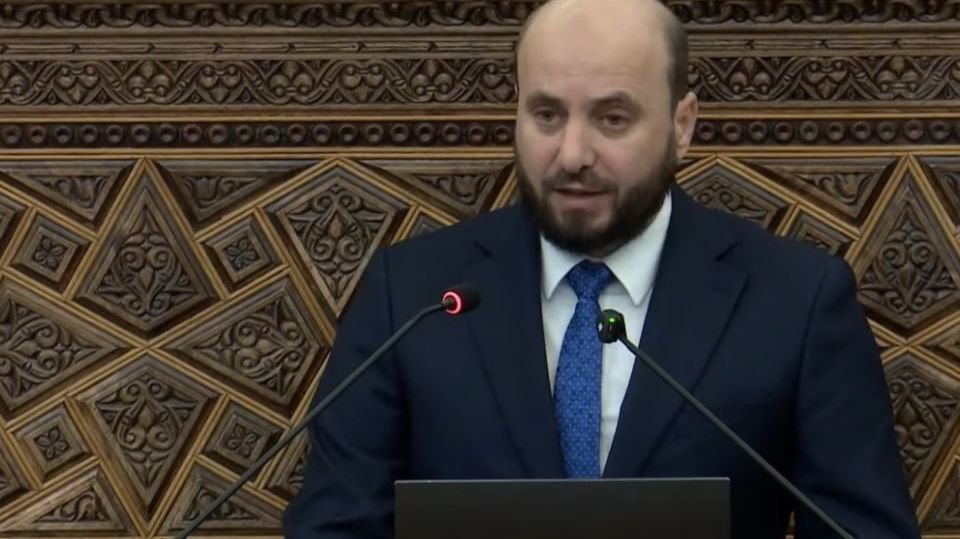
Syrian Minister of Energy, Mohammad Al-Bashir, presented a detailed overview of the national energy sector during an extraordinary session of the People’s Assembly. Addressing the current challenges facing the country, Al-Bashir emphasized the ministry’s commitment to implementing practical plans to increase oil and gas production to meet rising local market demand.
Minister Al-Bashir highlighted the critical nature of the energy portfolio, noting its direct impact on the national economy and citizens’ livelihoods. He stated that the ministry is focused on driving the sector toward sustainability by strengthening governance, diversifying energy sources, and cementing Syria’s position as a regional energy corridor. This strategy, he noted, aligns with the global transition toward clean energy sources. The minister acknowledged the long-standing challenges facing the sector, asserting that the ministry is operating under a vision rooted in efficiency, innovation, and partnership to ensure reliable energy security.
Regarding oil production, the minister revealed that efforts are underway to rehabilitate infrastructure across 78 oil fields. He explained that current well production remains dependent on technical conditions, with many wells temporarily closed for comprehensive maintenance to ensure safety and optimized output. Current domestic crude oil production stands at 112,000 barrels per day. With approximately 3.6 million vehicles now in the country, Syria faces a daily supply gap of 200,000 barrels, which must be purchased from abroad, in addition to imports of petroleum derivatives equivalent to 150,000 barrels daily.
The situation for natural gas is equally demanding. Domestic production currently reaches 8 million cubic meters per day, significantly trailing the actual requirement of 24 million cubic meters. Al-Bashir stated that the ministry is continuing to drill new wells to boost output. Currently, the ministry is importing 6.3 million cubic meters of gas daily to power electrical stations, at a cost of $140 million per month.
In financial terms, the minister noted that Syria requires $831 million monthly to secure crude oil and petroleum derivatives. These substantial costs necessitate the availability of foreign currency and consistent supply contracts amidst global energy volatility. To mitigate these pressures, the ministry is prioritizing the maintenance of existing refineries, including the Baniyas and Homs refineries, while working toward the future establishment of new facilities.
Concluding his address, Minister Al-Bashir announced a strategic plan aimed at achieving self-sufficiency in oil by 2028. He noted that increasing gas production to adequate levels is expected to take up to seven years. Furthermore, work is currently underway to complete the Arab Gas Pipeline coming from Jordan, a project valued at a quarter-billion dollars, intended to diversify supply sources and stabilize local market needs.
