Syrian Calligraphy Forum Highlights Arab Script Heritage in Damascus
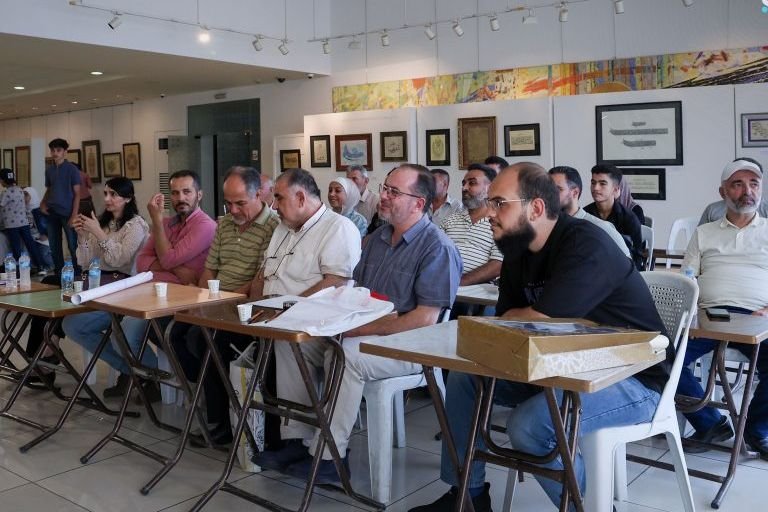
The fifth day of the Syrian Forum for Calligraphy and Ornamentation, hosted at the National Center for Visual Arts in Damascus, featured an intensive series of workshops dedicated to preserving the artistry of the Arabic script. Organized by the Ministry of Culture, the event aims to foster a deeper appreciation for traditional calligraphy and transmit its intricate techniques to new generations of students and enthusiasts.
The program centered on four specialized workshops, each focusing on a distinct calligraphic style. Participants engaged in deep-dive sessions regarding the Kufic Mushafi, Nasta’liq, Naskh, and Diwani scripts. The technical training was led by a cadre of established masters, including Ahmed Kamal, Mohammed Qana, Abd al-Nasser al-Masri, and Mohammed Saeed.
Ahmed Kamal, a prominent calligrapher and instructor at the Ahmed Walid Izzat Institute, emphasized the historical significance of the Kufic Mushafi script, describing it as a fundamental pillar of Syrian civilizational heritage. During his lecture, Kamal underscored the necessity for institutions to provide increased support for traditional calligraphy, which he argued remains a vital element of national identity. He expressed concern regarding the increasing reliance on electronic technology among students, warning that it threatens the decline of manual penmanship. He advocated for a more robust role for calligraphy education within school curricula to ensure that these traditional skills are passed down.
Reflecting on the legacy of the Syrian school of calligraphy, Kamal highlighted the influence of historical figures such as Sheikh Badawi al-Dirani and Helmy Habab. He noted that the survival and vitality of the Arabic script are inextricably linked to the cultural health of the nation, expressing his ambition to see Syrian calligraphers represented in international forums to restore the script to its rightful global standing.
The forum serves as a critical national platform, bridging the gap between master calligraphers and those aspiring to master the craft. By facilitating direct interaction between experts and students, the Ministry of Culture aims to solidify the role of official cultural institutions in protecting intangible heritage and maintaining the nation’s historical identity. Throughout the fifth day, attendees observed the meticulous process behind these artistic traditions, reflecting on the precision and discipline required to master the various historical scripts.
As the event continues, it underscores a broader commitment in Syria to preserve classical arts despite the encroaching digital age. The emphasis on hands-on instruction and the academic study of script forms highlights a deliberate strategy to safeguard a unique cultural narrative that has long defined the region’s artistic landscape.
