
Rising Euphrates Levels Halt Operations at Raqqa Quarries
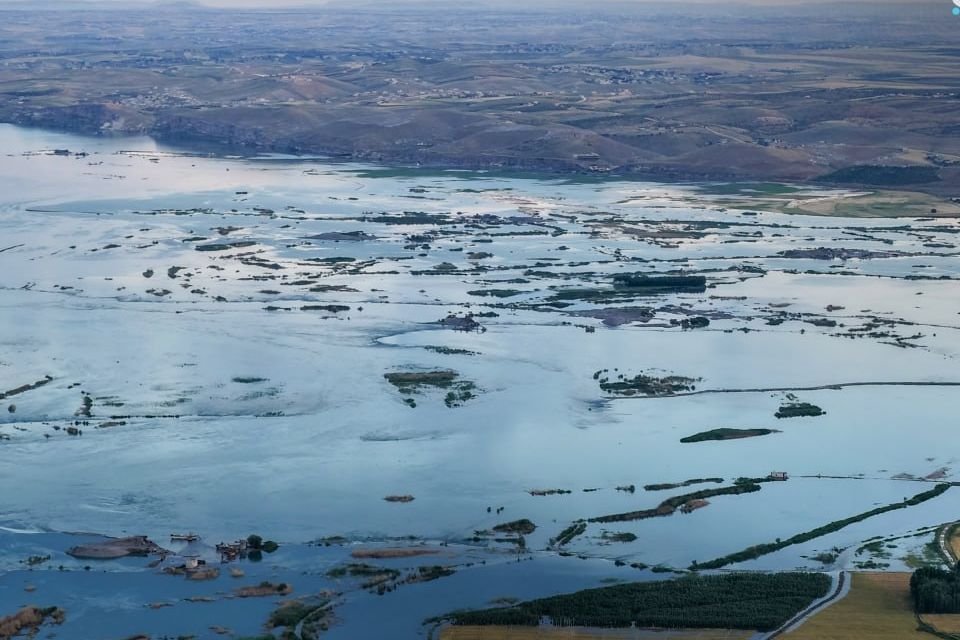
Operations at a gravel quarry and several adjacent sites in the Raqqa governorate have been temporarily suspended due to rising water levels in the Euphrates River. The site and its surroundings were submerged as the river rose, necessitating an immediate cessation of work to ensure the safety of personnel and equipment.
The Syrian Ministry of Energy, providing an update via its official communications channel on Sunday, confirmed that a technical team from the Syrian Mining Company’s Raqqa branch conducted a comprehensive field assessment of the area. This inspection was part of an ongoing monitoring program intended to oversee the status of quarry operations near the riverbank and to identify potential risks arising from sudden environmental changes.
During the survey, officials evaluated the immediate impact of the water level surge on extraction processes and existing work paths. The technical teams officially documented the closure of the affected quarry and neighboring sites, categorizing the shutdown as a necessary precautionary measure. Operations are expected to remain suspended until the water levels recede sufficiently to allow for safe, standard working conditions to resume.
A key focus of the ministry’s site visit was the implementation of robust safety protocols. These measures are designed to safeguard heavy machinery and the workers operating in the vicinity, particularly as the river’s flow dynamics evolve. The ministry continues to prioritize the protection of infrastructure and staff in the face of these localized natural fluctuations.
This incident follows broader efforts by local authorities to manage potential environmental and infrastructure risks in the region. Last Tuesday, the Raqqa Directorate of Emergency and Disaster Management established specialized field teams tasked with conducting daily monitoring of the Euphrates River’s water levels. These teams are responsible for assessing the safety of vital infrastructure and public facilities in the area, ensuring that any negative impacts from the rising river levels are observed and managed in a timely manner. The regional administration continues to coordinate these efforts to mitigate potential disruptions to essential local economic activities and to maintain the integrity of regional infrastructure.
