Residents in Raqqa’s Kasrat Villages Urge Sewage Network Upgrades
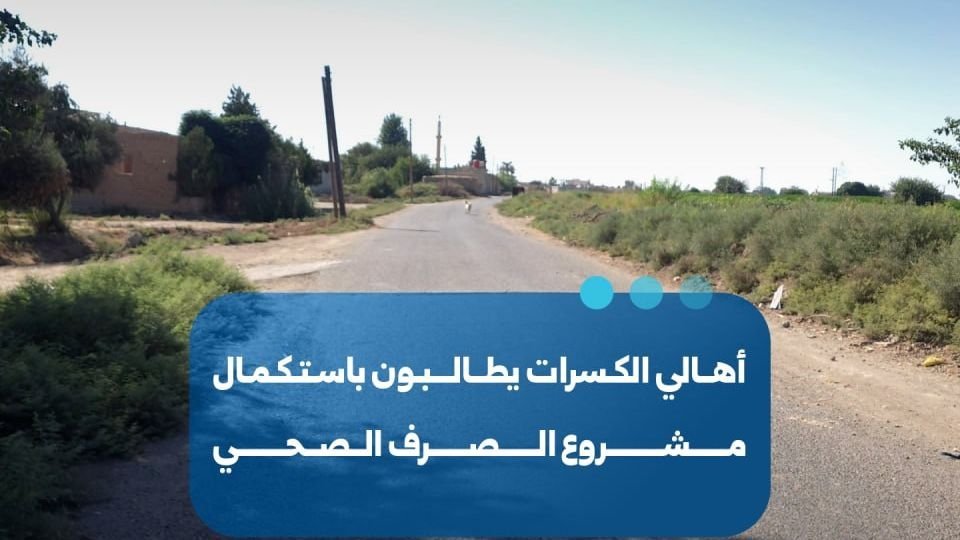
Residents of the Kasrat villages, located south of Raqqa, are reporting a persistent decline in the performance of their local sewage network. Recent years have seen significant urban expansion and population growth in the area, putting a strain on infrastructure that is no longer equipped to handle the increased service demands.
According to accounts from local residents, the region’s main sewage line, which was installed over 15 years ago, is inadequate for the current population density. The system’s failure has caused wastewater to back up into residential homes and commercial storefronts. In addition to the physical damage, the situation has led to foul odors, the accumulation of waste, and a rise in insect infestations. Residents have expressed serious concerns regarding the environmental and public health risks, particularly the potential for contaminated water to seep into the Euphrates River.
Citizens in the affected area have emphasized that a definitive solution requires the construction of a new sewage line, designed with precise technical specifications and professional engineering standards. They also stressed the urgent need to build a wastewater treatment plant at the end of the line to protect the environment and ensure that pollutants do not reach the river water.
Ali Al-Hussein, head of the Raqqa City Council, explained that authorities are addressing these demands within a structured framework, prioritizing projects based on available financial resources and strategic needs. Al-Hussein noted that the Directorate of Sewage and the Department of Public Works have been tasked with preparing new technical studies for the villages of Kasrat Faraj, Sheikh Al-Jum’a, Ratla, and Al-Sahel. These studies aim to rectify errors found in previous assessments—specifically concerning elevation variances—to prepare the projects for inclusion in upcoming implementation plans.
These initiatives are part of the Raqqa City Council’s ongoing efforts to rehabilitate damaged infrastructure, with a particular focus on improving sewage networks as a primary service objective. In July, the council launched a comprehensive package of 34 sewage projects, including 12 major projects within Raqqa city covering eight kilometers. These efforts are aimed at enhancing essential services and improving the overall environmental conditions in the province.
