Palmyra’s Echo at Venice Biennale: Syrian Art Honors History
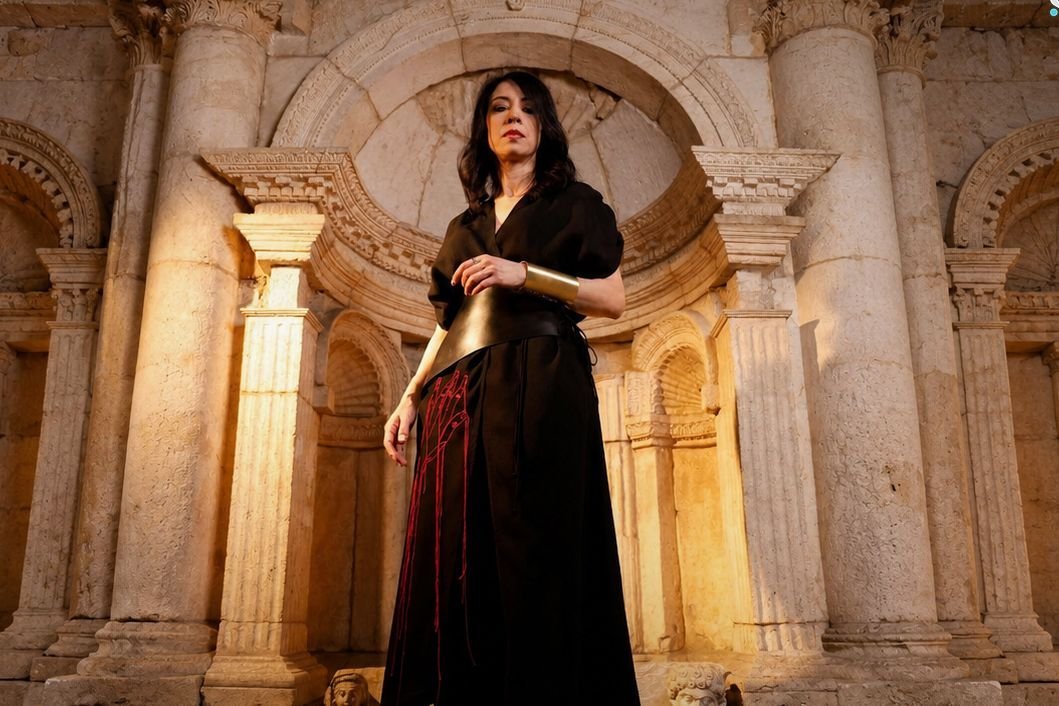
In a move to strengthen Syria’s cultural presence on the international stage, the Syrian national pavilion is participating in the 61st Venice Biennale with an innovative project titled ‘Palmyra Funerary Tower’ by artist Sara Shamma. This artistic endeavor aligns with the Syrian Ministry of Culture’s vision to reaffirm Syria’s role as an active partner in the production of art and knowledge, moving beyond recovery and restoration to creating a global cultural impact.
The project offers an immersive visual and sensory experience inside a full-scale structure that mimics the form of Palmyrene funerary towers. It utilizes a combination of painting, architecture, sound, light, and scent. Central to the experience are massive portraits of figures inspired by ancient Palmyrene characters, rendered with features that reflect the contemporary era. This creates an artistic intersection between profound historical memory and modern human experience. The work is currently being displayed in the courtyard of the Iuav University of Venice and will remain open to the public until November 22.
Minister of Culture, Mohammad Yassin al-Saleh, emphasized that Syria’s participation in this global forum reflects a comprehensive approach to cultural diplomacy that parallels official diplomatic efforts. Al-Saleh noted that Syria, historically a crossroads of civilizations and a space for creativity, is striving today to present its living heritage through contemporary art. He stressed that the new generation of Syrians possesses the capacity to transform memory into energy for the future.
For his part, Waseem Abdel Hamid, Commissioner of the Pavilion and Director of the Fine Arts Department, explained that the decision to feature a single project and a singular artistic voice was made to ensure unity of visual and intellectual vision, moving away from a rigid, documentary approach to heritage. Abdel Hamid highlighted that Palmyra was chosen as a symbolic reference that stores the traces of successive civilizations. He noted that the work prompts the viewer to reflect on the destruction and looting suffered by Syria’s heritage, and how art can serve as a medium to protect this memory and reintroduce it into global cultural dialogue.
The Syrian pavilion has garnered significant interest from cultural elites and international media outlets. International press reports have focused on the sensory aspects of the installation, the participation of Syrian experts in the construction of the work’s elements, and its value as a diplomatic message that allows Syrian artists to formulate the major aesthetic questions of their time.
Looking toward post-Venice plans, the Ministry of Culture revealed an ambitious strategy to use this participation as a cornerstone for a long-term path of international partnerships. Abdel Hamid announced preparations for the launch of the ‘Syrian Biennale for Contemporary Art,’ which is intended to be a recurring institutional national platform. The initiative aims to support Syrian creators and open sustainable channels of collaboration with international museums and art centers, ensuring the continued presence of Syrian art as an essential partner in the international cultural landscape.
