
Ottoman Bath in Arwad Faces Erosion and Risk of Collapse
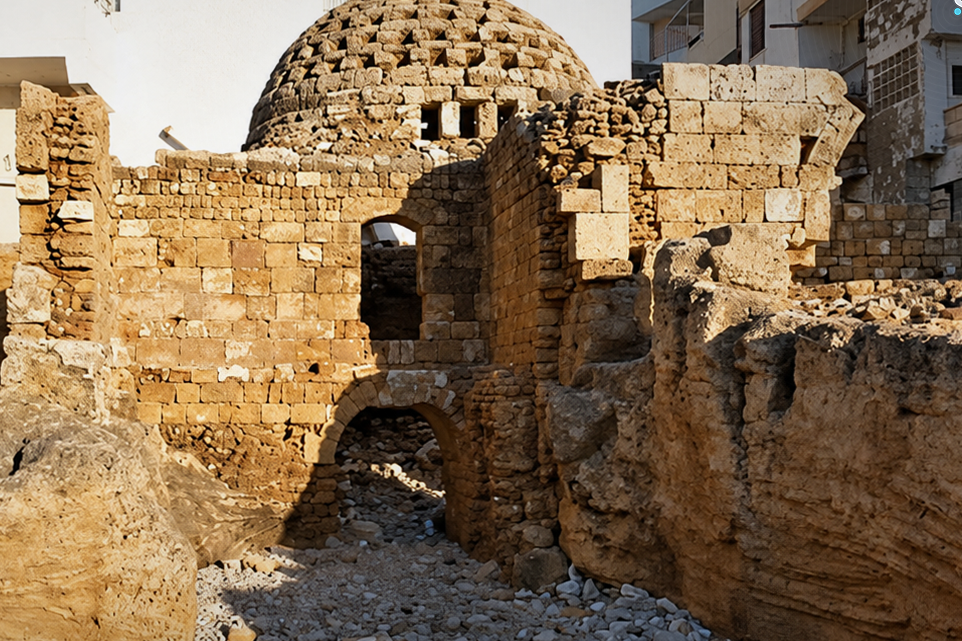
On the western edge of Arwad Island in Tartus, a historic Ottoman-era bathhouse stands as a silent witness to a significant past. Built upon a rocky outcrop near the island’s ancient walls, the structure was originally reserved for the governor of Arwad during the Ottoman period. Today, however, the site faces critical structural challenges that threaten its very existence, exacerbated by a total lack of maintenance for many years.
The building is composed of two primary sections, known as the “Barrani” and the “Jawani,” which are connected by arched doorways. The facility includes bathing chambers and a large vaulted hall. Among its most notable architectural features is a domed structure with a neck and windows integrated with “qamariyat” (decorative glass inserts) to allow light into the interior. According to the “Encyclopedia of Antiquities in Syria,” the interior walls were historically adorned with red-toned decorations, reflecting the high standard of design and utility of the era, which also featured advanced ceramic water drainage systems.
Historical records indicate that the bathhouse sustained severe damage during a powerful maritime storm that struck the island in 1918. Since that time, constant exposure to humidity and the harsh marine climate has degraded the building’s stones and the mortar binding them together, making it increasingly difficult to maintain the integrity of the structure. Abdul-Hay Al-Muhammad, the Director of Antiquities in Tartus, confirmed that the current state of the bathhouse is hazardous. A portion of the southern section has already collapsed due to weather factors and the absence of restoration efforts; the last intervention by the Directorate of Antiquities and Museums dates back to 2004.
The site’s historical significance extends beyond the Ottoman era. Al-Muhammad noted the presence of rock-cut caves and cavities in the immediate vicinity of the bath, which are believed to date back to the Phoenician period. This discovery underscores the necessity of treating the location as an integrated historical complex, requiring a comprehensive study that encompasses not only the Ottoman bath but also the relationships between the adjacent structures and the older historical layers beneath them.
From a legal and practical perspective, restoration efforts face an additional hurdle due to the bathhouse’s private ownership status. The Tartus Antiquities Department is currently working to engage with the owners and heirs to coordinate the necessary legal and technical frameworks to initiate restoration. Authorities emphasize that any future intervention must be based on a precise, documented study of all remaining parts and existing damage to ensure the preservation of the original features of this landmark, which remains an inseparable part of Arwad’s architectural heritage. Residents and visitors of the island continue to wait for practical action to save what remains of this building, ensuring it stays a living testament to the history and memory of the site.
Source: Syria Focus Arabic
