
Lithotripsy Department Opens at Daraa National Hospital
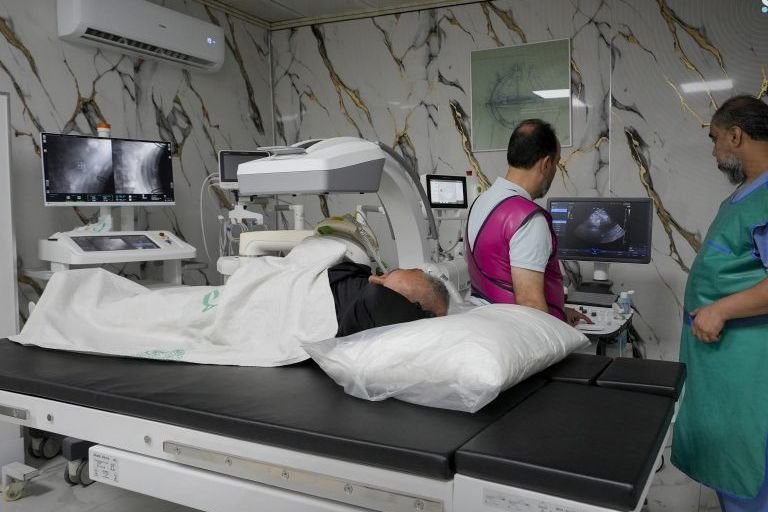
The lithotripsy department at Daraa National Hospital is now officially operational, following the installation of a modern, advanced device specifically designed for breaking down kidney and urinary tract stones. This achievement marks a significant step in expanding specialized medical services within the Daraa governorate, made possible through the collaborative efforts of the “Abshiri Horan” campaign, the Daraa Health Directorate, and the hospital administration.
In a statement to the media, Khaled Al-Hussein, a radiology technician at Daraa National Hospital, confirmed that the department has begun receiving patients daily, from Sunday through Thursday. He noted that the unit currently has the capacity to handle between five and seven cases per day. Al-Hussein emphasized that the opening of this department represents a qualitative leap in the standard of healthcare provided, as it directly contributes to reducing the financial and physical burdens previously placed on patients and their families.
One of the first patients to utilize the new service, Mohammad Amyan, expressed his satisfaction with the development. Amyan explained that he sought treatment at the hospital after experiencing renal pain, and medical examinations confirmed the presence of a stone requiring lithotripsy. He pointed out that receiving treatment within the hospital saved him the trouble and expense of traveling to other regions to find care, and he praised the efforts that led to the provision of this specialized service.
The introduction of this technology is part of a broader plan aimed at upgrading the medical staff and equipment at Daraa National Hospital. The initiative seeks to ensure that patients have access to specialized therapeutic services within the geographic boundaries of the governorate. This step is part of ongoing efforts by health institutions to strengthen local medical infrastructure and reduce the necessity for residents to seek medical care in other governorates, thereby lowering the costs and hardships associated with travel for treatment.
The availability of the lithotripsy device at the National Hospital is expected to increase the efficiency of medical operations in the governorate and provide rapid, effective solutions for patients visiting the urology department. This development strengthens the hospital’s role as an integrated healthcare center capable of meeting the needs of local residents in Daraa and its surroundings. Furthermore, it helps alleviate pressure on central health systems, aligning with broader goals to improve the quality of medical services provided within the public sector.
