
Homs University Boosts Industrial Ties Through Digital Manufacturing
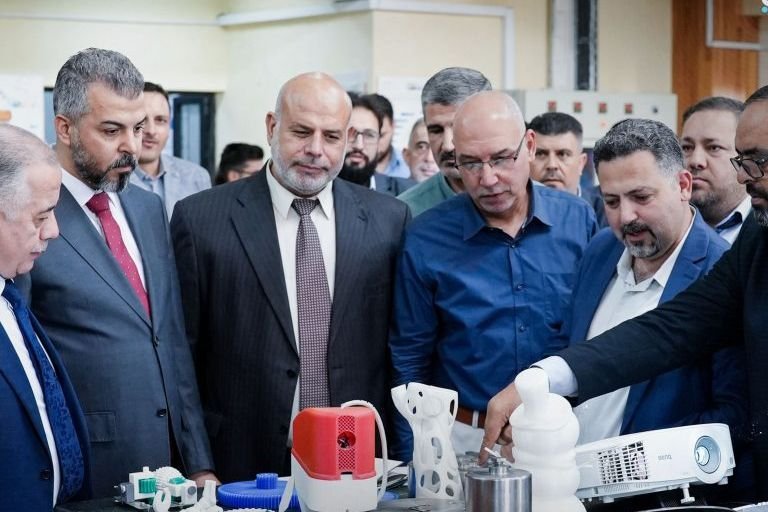
The Faculty of Mechanical and Electrical Engineering at Homs University has organized an industrial forum to showcase how the university’s programmed machining laboratory can support the local industrial sector. The event, titled “Digital Manufacturing and CNC Machining Technologies,” focused on the necessity of aligning academic expertise with the practical requirements of the regional industrial market.
During the event, participants were introduced to the capabilities of the laboratory, which has recently been reactivated. Organizers presented live demonstrations of projects completed by the lab, including digital manufacturing and 3D printing tasks. These projects featured parts produced using programmed milling machines and lathes. The university aims to provide engineering and technical solutions to challenges faced by industrial operators by offering direct technical consultations and research support.
Tarek Hossam El-Din, President of Homs University, stated that the initiative is designed to inform the industrial sector of the services the university can offer. He noted that the forum facilitated dialogue between academic staff and factory owners to discuss field-based challenges. Zaher Zakrit, Director of the Homs Industry Directorate, emphasized the importance of this cooperation in bridging the gap between scientific research and productive reality, which is intended to support the development of industrial facilities across Syria.
To enhance practical skills, the laboratory team announced the launch of a free training program for technical staff from participating companies. This program is designed to train professionals on the modern technologies utilized in the facility. Tarek Harb, the laboratory supervisor, explained that the facility’s equipment includes a programmed machining section featuring a four-axis milling machine and advanced lathes equipped with automatic tool changers and workpiece feeders. Additionally, the lab includes a dedicated section for 3D printing, utilizing FDM and resin technologies to manufacture plastic parts in various sizes and dimensions.
The initiative received positive feedback from the private sector. Salah Maqdesi, Quality Manager at Bimpro, highlighted the forum as a foundational step toward broader, sustainable cooperation between academic institutions and companies. He noted that such efforts support the modernization of local industry and the localization of modern technology. These initiatives are part of a wider strategy to strengthen the practical aspects of engineering education and train students using the latest manufacturing tools, ensuring that university graduates are well-equipped to meet the needs of the national economy and the Syrian market.
Source: Syria Focus Arabic
