
Drinking Water Crisis Worsens in Northern Deir ez-Zor
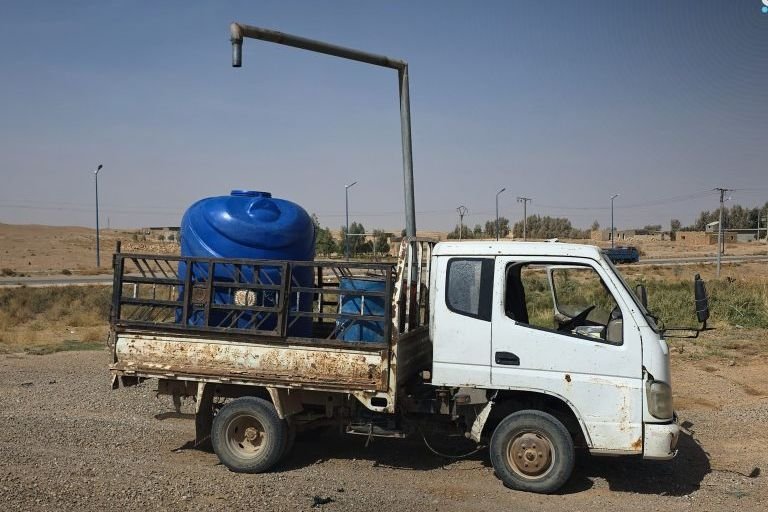
Residents of Al-Suwar town and the village of Ghariba al-Sharqiya in the northern countryside of Deir ez-Zor are grappling with a persistent drinking water crisis. The struggle stems from a significant decline in the operational capacity of the Al-Suwar water station, which previously served over 45,000 people but now covers only about 20,000 residents.
Ahmed al-Kamal, director of the Al-Suwar water unit, explained in press statements that the village of Ghariba al-Sharqiya has faced water shortages since 2011. Consequently, residents have been forced to rely on purchasing water via tankers to meet their basic needs. Al-Kamal attributed the primary causes of the crisis to illegal tampering with main water lines and the actions of some farmers who utilize large-diameter hoses to siphon water for irrigation purposes. He also noted that a lack of functional storage tanks, which have not been properly activated, has further exacerbated the situation.
Regarding potential solutions, Al-Kamal stated that a technical proposal aimed at rehabilitating the Al-Suwar water station has been under review by the United Nations Children’s Fund (UNICEF) for the past eight months. Furthermore, he emphasized that local authorities are working in coordination with the community to remove illegal connections from water networks to ensure that supply reaches designated storage tanks.
Local citizens have expressed their frustration with the ongoing hardship. Resident Ibrahim al-Barrak noted that the water currently reaching the Al-Suwar canal is unfit for drinking, and he urged relevant authorities to intervene urgently to resolve the delivery problems affecting the district and the village of Ghariba al-Sharqiya. Another resident, Khader Ali al-Khader, pointed out that the financial burden of purchasing unfiltered water from tankers is beyond the purchasing power of many families. He also highlighted the significant health risks posed to adults and children alike due to the consumption of this untreated water.
Meanwhile, the General Establishment for Drinking Water and Sanitation in Deir ez-Zor, in cooperation with the governorate, has launched a project to extend water networks to previously unserved areas. This initiative involves laying approximately 19 kilometers of new pipelines across 17 residential clusters in various parts of the province. The project is intended to expand coverage, improve access to drinking water, and address the infrastructure challenges currently impacting those areas.
Source: Syria Focus Arabic
