
Al-Hasakah: Field Day Highlights Benefits of ‘Aleppo 90’ Cotton
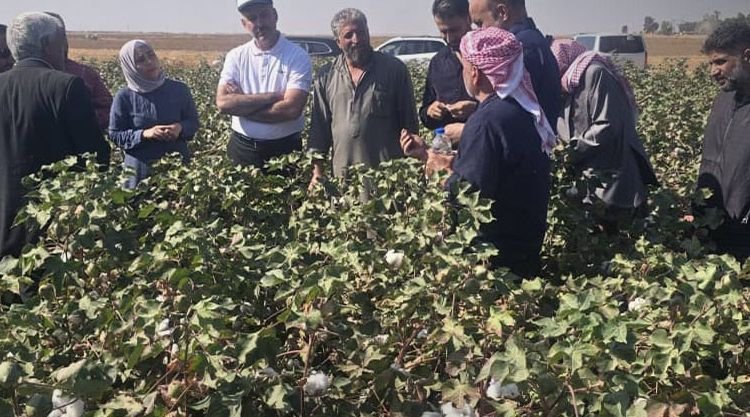
The Cotton Research Administration, under the General Commission for Scientific Agricultural Research, recently held a specialized field day in Al-Hasakah. Conducted in cooperation with the local Center for Scientific Agricultural Research, the event took place at a model farm in the village of Al-Razaza, south of Tal Tamer.
The initiative aimed to highlight the technical and productive characteristics of the local “Aleppo 90” cotton variety, while promoting best practices among regional farmers.
During the event, the Director of the Cotton Research Administration, Jamila Darbas, provided a detailed explanation of the technical advantages of the “Aleppo 90” variety. She emphasized its high-quality staple length and fiber softness. Furthermore, she offered specific recommendations regarding the crop’s water requirements to ensure optimal production yields.
Addressing the common obstacles faced by cotton farmers, researcher Jumaa Loola discussed the management of insect pests and fungal diseases. He provided guidance on scientific prevention and control methods, stressing the necessity of using reliable pesticides and intervening promptly once infestations reach the established economic threshold.
Mohammad Murshid Al-Daher, Director of the Scientific Agricultural Research Center in Al-Hasakah, issued a stern warning regarding the risks of using cotton seeds of unknown origin in local markets. He explained that such seeds often lead to a decline in fiber quality, resulting in products that fail to meet the standards required by the textile industry. Additionally, he noted that unauthorized seeds risk introducing new agricultural diseases and pests that could devastate the season.
Al-Daher highlighted that the approved Syrian varieties, led by “Aleppo 90,” possess distinct technological specifications suitable for textile and apparel manufacturing. He urged farmers to prioritize germination testing and verify the genetic characteristics of seeds before planting.
Ahmad Al-Khalid, representing the Al-Hasakah branch of the Agricultural Engineers Syndicate, echoed these concerns. He emphasized the importance of strengthening regulatory oversight of production inputs. He called for the systematic collection of random samples from markets for laboratory analysis to ensure the quality and efficacy of agricultural supplies before the start of the season.
This field day occurs as authorities continue to develop genetic improvement programs. Currently, Syria cultivates six approved varieties developed by the Cotton Research Administration. Cotton remains a strategic pillar of the Syrian agricultural economy; the previous season saw approximately 2,578 hectares dedicated to the crop, yielding over 5,627 tons, despite significant challenges posed by drought conditions.
Source: Syria Focus Arabic
