
Syrian Agriculture Ministry Announces New Support Plan for Daraa
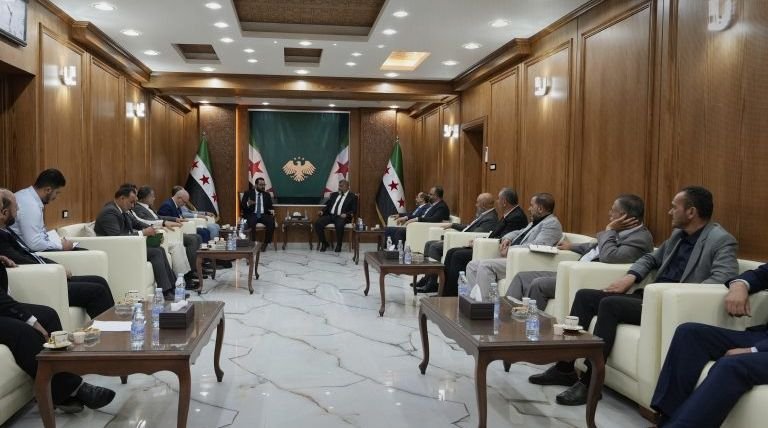
Syria’s Minister of Agriculture, Bassel Al-Sweidan, has unveiled a new, integrated development strategy aimed at revitalizing the agricultural sector in Daraa province. The announcement came during a series of official meetings in the region, where the minister met with provincial authorities, local stakeholders, and farmers to address long-standing challenges that have hindered local productivity.
The ministry’s strategy focuses on transforming the agricultural sector into a sustainable economic engine by addressing systemic issues that have plagued farmers for years. Key areas of concern identified during the visit include difficulties in marketing and distribution, insufficient access to high-quality agricultural inputs, and a lack of modern veterinary resources. These obstacles, compounded by previous planning and administrative shortcomings, have led to a noticeable decline in the province’s overall production capacity.
Central to the government’s approach is the expansion of agro-processing facilities. Minister Al-Sweidan emphasized the need to foster partnerships with the private sector to establish new manufacturing plants. These facilities are designed to add value to raw agricultural products and handle surplus production, which will prevent seasonal waste and ensure that farmers receive better financial returns for their efforts. The ministry is currently reviewing options for establishing tomato paste production facilities in the region, among other potential agro-industrial projects.
Financial support for the farming community is also a priority. The Ministry of Agriculture is conducting consultations with the Ministry of Finance to facilitate the provision of soft loans to farmers. A specific ‘good loan’ initiative for wheat cultivation is slated for implementation this year, with plans to expand this financial support to other crops in the near future. These funds are intended to help farmers secure essential machinery, including tractors and harvesters, to maintain continuous production cycles.
The ministry’s broader 2026–2030 development plan, initiated earlier this year, aims to develop a robust national production system that balances internal food security with the potential for exporting high-quality surplus to regional markets. To this end, the ministry is advocating for the adoption of better agricultural practices, such as the strict adherence to seasonal crop calendars that align production with market demand and climate conditions. This approach is intended to prevent market gluts during peak harvest times, which have historically caused significant financial losses for producers.
During his tour, Minister Al-Sweidan visited the Seed Multiplication Institution and local agricultural research centers in Izra, where he stressed the importance of field-based solutions to boost yield quality. Furthermore, as part of the ministry’s remedial actions, authorities have committed to purchasing 3,000 tons of grain from farmers who were unable to deliver their crops during the standard harvest window. The ministry has also directed the repair of various water wells to optimize irrigation resources and promote more sustainable water use patterns across the province.
