
Damascus Awqaf Celebrates Legacy of Imam Al-Nawawi
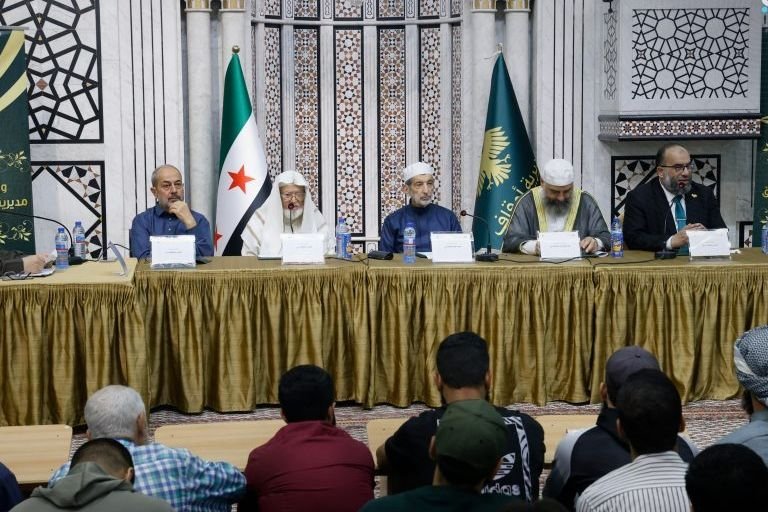
The Damascus Awqaf Directorate has hosted its second lecture as part of the semi-monthly intellectual and scientific series titled “The Great Figures of the Nation.” The event, held at Al-Iman Mosque in the Al-Mazraa neighborhood of Damascus, focused on the life, scholarship, and literary contributions of the renowned Islamic scholar Imam Al-Nawawi.
The event drew a distinguished audience, including scholars from across Syria and members of the High Fatwa Council. Among the featured speakers were Sheikh Mohammed Naeem Al-Arqasusi, Sheikh Mutee Al-Batin, Sheikh Mohammed Nadheer Maktabi, and Sheikh Abdul Hadi Al-Bustani. The speakers explored key chapters of Imam Al-Nawawi’s life, emphasizing the enduring significance of his academic and pedagogical heritage, as well as his rigorous approach to research and verification.
This initiative is part of an ongoing program organized by the Awqaf Directorate to highlight the intellectual figures who have enriched the scientific history of the Levant. The program also aims to foster a sense of mentorship and provide positive role models for the younger generation.
Sheikh Thair Hanano, head of the Mosques Affairs Department at the Damascus Awqaf Directorate, noted that these gatherings reflect Damascus’s commitment to reclaiming its status as a beacon of knowledge and a center for civilizational exchange. He emphasized that the capital’s mosques are performing a historic role in building societal awareness, fostering unity, and promoting humanitarian commonalities over sectarian division. According to Hanano, these efforts are focused on human development and the strengthening of social solidarity.
Addressing the importance of the legacy of major scholars, Sheikh Mutee Al-Batin highlighted the need to educate youth on the methods of past figures regarding respect for diversity and differing perspectives. He argued that in light of current circumstances, the nation has an urgent need to set aside disagreements and prioritize shared values to ensure social unity. Complementing this, Sheikh Abdul Hadi Al-Bustani noted that the seminars aim to instill values of balance, piety, and the integration of knowledge with practice—principles that defined the life and work of Imam Al-Nawawi.
This lecture is part of the “Unity of Islamic Discourse” charter, launched by the Syrian Ministry of Awqaf last February. The charter seeks to unify the perspective of scholars on general religious issues and promote national and educational values. It follows a series of scientific workshops and dialogues that have involved hundreds of scholars from across Syria.
Imam Muhyiddin Yahya bin Sharaf Al-Nawawi (631–676 AH), who served as the Sheikh of the Dar al-Hadith al-Ashrafiyya in Damascus, remains one of the most prominent figures in the history of Islamic jurisprudence and Hadith in the Levant. His vast legacy, characterized by a sound methodology and depth of knowledge, continues to serve as an exemplary model for contemporary Syrian educational and outreach curricula.
Source: Syria Focus Arabic
