
The Cave Hospital in Kafr Batna: A Living Witness to Eastern Ghouta
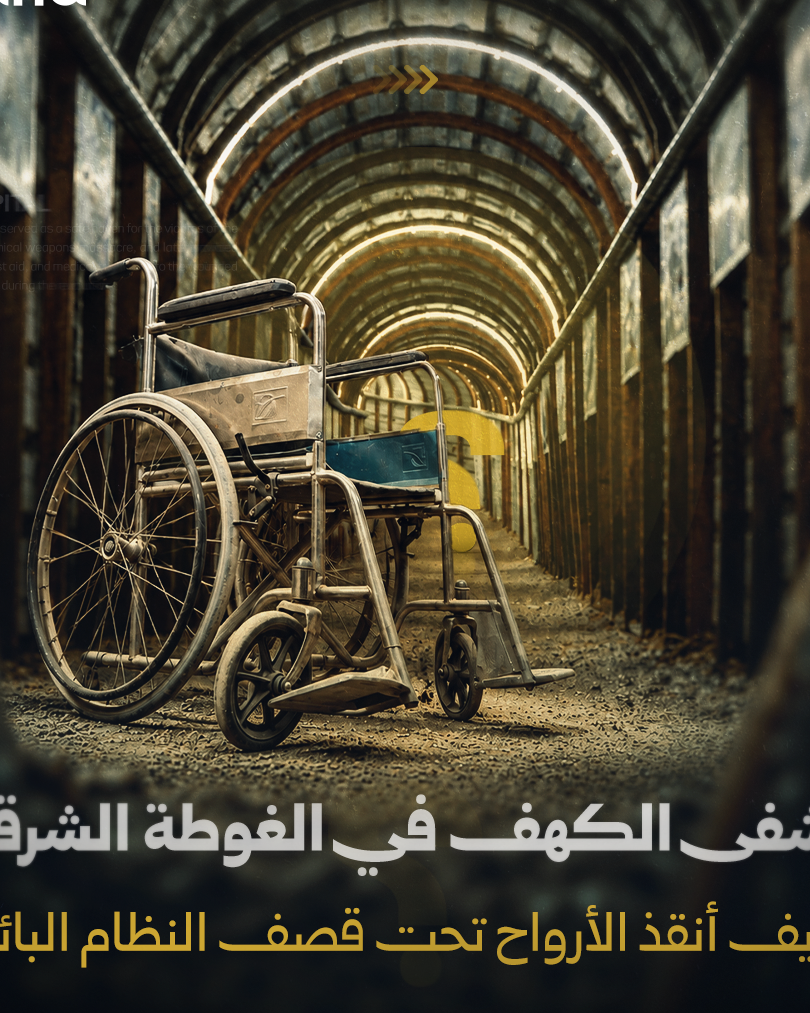
The Cave Hospital, located in the town of Kafr Batna in Eastern Ghouta, Rif Dimashq, stands as one of the most prominent landmarks linked to the memory of the Syrian war. Originally a medical facility dedicated to saving lives, it transformed into a silent witness to the extent of the crimes and violations that affected civilians in the region.
Throughout the years of siege and the intense military operations that gripped Eastern Ghouta, the hospital played a pivotal role under extremely difficult conditions. Faced with constant shelling, medical personnel were forced to establish subterranean facilities to protect the wounded and the sick. This necessity earned the site its famous name, the “Cave Hospital.”
For thousands of Syrians, the facility served as a final refuge when all other options had been severed by the suffocating siege and the widespread military operations that targeted local infrastructure and essential service centers. As time passed, the hospital transcended its role as a mere medical point. In the collective consciousness of the public, it became a symbol encapsulating the stories of doctors, paramedics, and civilians who endured severe hardships. It stood as a witness to hundreds of difficult humanitarian cases and documented crimes reported by organizations and activists against the residents of Ghouta.
Today, following the Syrian government’s restoration of control over the area, the Cave Hospital in Kafr Batna remains present in the Syrian memory as a tangible piece of evidence of a dark period in the history of the conflict. Its walls and excavated tunnels continue to recount the details of the human suffering experienced by Syrians in Eastern Ghouta, cementing its status as a living historical document that remains etched in the town’s history.
Source: Syria Focus Arabic
