Syrian Graduates Face Skills Gap and Employment Challenges
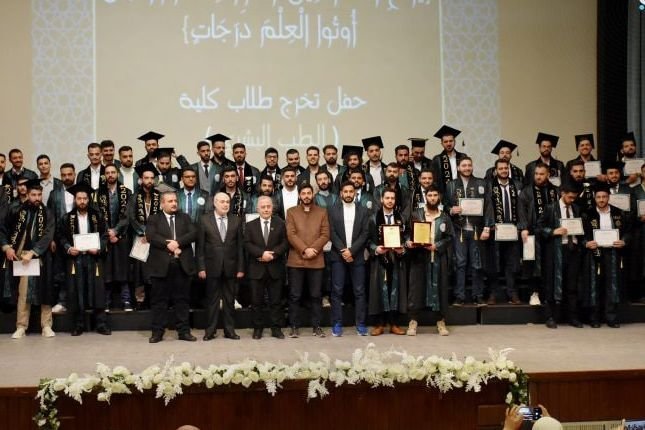
Recent university graduates in Syria are facing significant challenges during the transition from academia to the professional workforce. Many encounter a mismatch between their academic preparation and the practical demands of employers, who often prioritize candidates with existing professional experience. This disconnect has sparked a national dialogue regarding the skills gap and the urgent need to align higher education with the requirements of both the private sector and government institutions.
Ayham Al-Bashir, Director of Training and Development at the Syrian Media Academy, noted that the core issue is not the academic degree itself, but the ability to translate theoretical knowledge into practical professional tools. Al-Bashir emphasized that the solution lies in fostering hands-on training through projects that simulate real-world work environments. He also highlighted the necessity of involving employers in the design of curricula and the assessment of training outcomes. Furthermore, Al-Bashir advocated for the expansion of programs that bridge training with direct employment, giving young people a genuine opportunity to gain experience and build a professional portfolio that demonstrates their capabilities.
Samah Shoura, a human resources consultant at an engineering and administrative consultancy firm, pointed out that current corporate hiring standards go beyond academic records. She noted that employers are increasingly focused on “soft skills,” such as effective communication, teamwork, and the ability to work under pressure, in addition to foundational technical skills. Shoura argued that the probationary period should serve as the primary metric for evaluating a new employee’s competence, rather than placing excessive weight on previous years of experience, which new graduates often lack the opportunity to acquire.
On the other side of the equation, students frequently struggle to balance rigorous academic schedules with the pursuit of external internships, particularly given the constraints of time and available resources. Mohammad Salloum, a business administration graduate, highlighted that the demand for years of experience in job advertisements remains a major hurdle for young job seekers. He suggested that there is a critical need for supported training programs and updated curricula that are more responsive to the realities of the modern labor market.
Efforts to bridge the divide between education and the economy are gaining momentum. Earlier this year, the University of Damascus held discussions on mechanisms to provide practical training for graduates within the private sector. Additionally, Deir ez-Zor Governorate has launched the “Makers of Tomorrow” project, which aims to qualify university students and integrate them into the workforce and entrepreneurship, marking a strategic step toward aligning educational outputs with the actual needs of the Syrian economy.
Source: Syria Focus Arabic
