
Al-Hasakah: Water Crisis Persists Despite Pumping Improvement Efforts
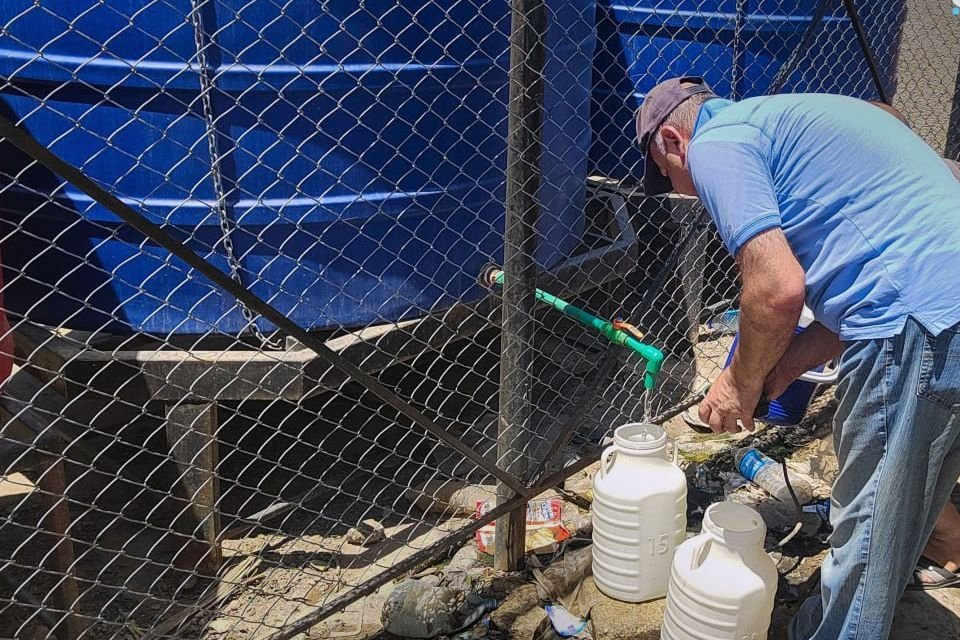
The drinking water crisis continues to impact daily life in the city of Al-Hasakah, with many residents across several neighborhoods reporting that they either receive insufficient water or none at all. This persists despite recent efforts and measures announced by the General Company for Water and Sanitation in the governorate to improve pumping operations and increase supply hours.
Affected areas include the neighborhoods of Al-Salhiya, Al-Musheirfiya, Al-Talai, Ghwayran, Al-Zuhour, and Al-Layliya. Residents in these districts face growing difficulties in meeting their basic water needs. According to local feedback, the recent technical adjustments have not resulted in a tangible improvement in water reaching residential networks.
Raed Al-Satam, a resident of the Ghwayran neighborhood, noted that the increased pumping hours have not positively impacted the southern parts of the district, which have suffered from water shortages for many years. Al-Satam explained that residents now rely primarily on water provided by humanitarian organizations through public tanks or by purchasing water from private tankers. He stated that this creates an additional financial burden on low-income families given the current economic circumstances.
Abdullah Musa, from the Al-Zuhour neighborhood, explained that field measures, including the extension of additional branch lines, have not achieved their intended goals. Musa pointed out that the interconnected nature of the network in these neighborhoods with adjacent areas requires a different strategy. He called for increasing the quantities allocated to these districts and utilizing pumps with higher capacities to ensure water reaches all subscribers.
Similarly, Salah Al-Muhammad from the Al-Layliya neighborhood urged the relevant authorities to intensify efforts to boost pumping pressure to ensure water reaches homes at higher elevations and the far ends of the network. He emphasized the necessity of strict field monitoring to address bottlenecks and emergency malfunctions that hinder the equitable distribution of the announced supply hours.
For its part, the General Company for Water and Sanitation in Al-Hasakah, represented by its director, Engineer Farhan Al-Oweis, attributed these challenges to several factors. Key reasons include ongoing maintenance work at the Al-Aziziyah pumping station, frequent power outages affecting pump operations, and illegal tampering with the network that leads to water waste. Al-Oweis further noted that sudden malfunctions and breaks during pumping operations require immediate intervention by technical teams, while also taking into account the varying geographical elevations between neighborhoods.
Al-Oweis affirmed that the company prioritizes citizen complaints. He stated that the company is working within a comprehensive plan to improve network performance, which includes maintaining and increasing the efficiency of supply pumps in partnership with donor organizations. Furthermore, he noted that the company is working continuously to remove illegal connections to the network with the aim of achieving greater stability in providing water to subscribers.
Source: Syria Focus Arabic
