
Quneitra Expects 2,040-Ton Pomegranate Harvest Amid Farming Challenges
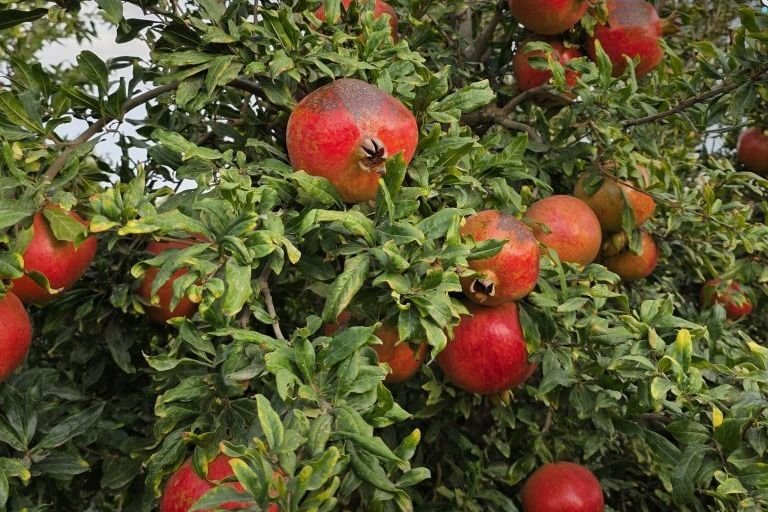
Quneitra province has begun preparations for this year’s pomegranate harvest, with early indicators suggesting a positive yield despite the difficult conditions currently facing farmers in the southern countryside.
According to data from the Quneitra Agriculture Directorate, total production for the season is expected to reach approximately 2,040 tons. This figure underscores the importance of the sector, which serves as a vital economic pillar for many families in the villages and towns of the southern countryside. Pomegranate cultivation supports household economies through the sale of fresh fruit and traditional processing into molasses and jams—products that maintain strong demand due to their quality and nutritional benefits.
Digital mapping of the crop indicates that there are 218 hectares dedicated to pomegranate trees, totaling 111,000 trees. Of these, 73,000 trees have already entered the active production phase. While the region is characterized by favorable climate conditions and fertile soil, the current season presents several technical and operational challenges.
From a technical perspective, some of the crop is suffering from fruit cracking. The Agriculture Directorate attributes this phenomenon to irregular irrigation during the fruit maturation stages. To mitigate these losses, the directorate has advised farmers to strictly regulate watering intervals and avoid sudden periods of drought. Additionally, the department emphasized the importance of providing trees with essential nutrients, such as potassium and calcium, to improve the durability and elasticity of the fruit’s peel.
Farmers, meanwhile, have highlighted additional burdens impacting their productivity. Most notably, they face rising costs for production inputs, including sharp increases in the prices of fuel and electricity required to operate irrigation pumps. Furthermore, the high cost of fertilizers and pesticides—which must be imported using foreign currency—has placed significant financial strain on producers.
These difficulties are further compounded by frequent Israeli incursions and attacks in the region. Beyond causing physical damage to the land, these incidents restrict the access of merchants and seasonal buyers to the farms, creating a risk that harvested crops may accumulate and spoil due to a lack of market access.
Despite these challenging circumstances, pomegranate cultivation remains a viable investment in the Quneitra countryside, both in irrigated and rain-fed areas. Farmers continue their efforts to supply the Syrian markets with high-quality produce, viewing the stability of this sector as an integral component of supporting local food security and agricultural processing.
Source: Syria Focus Arabic
