Tribal Reconciliation in Daraa Promotes Local Social Stability
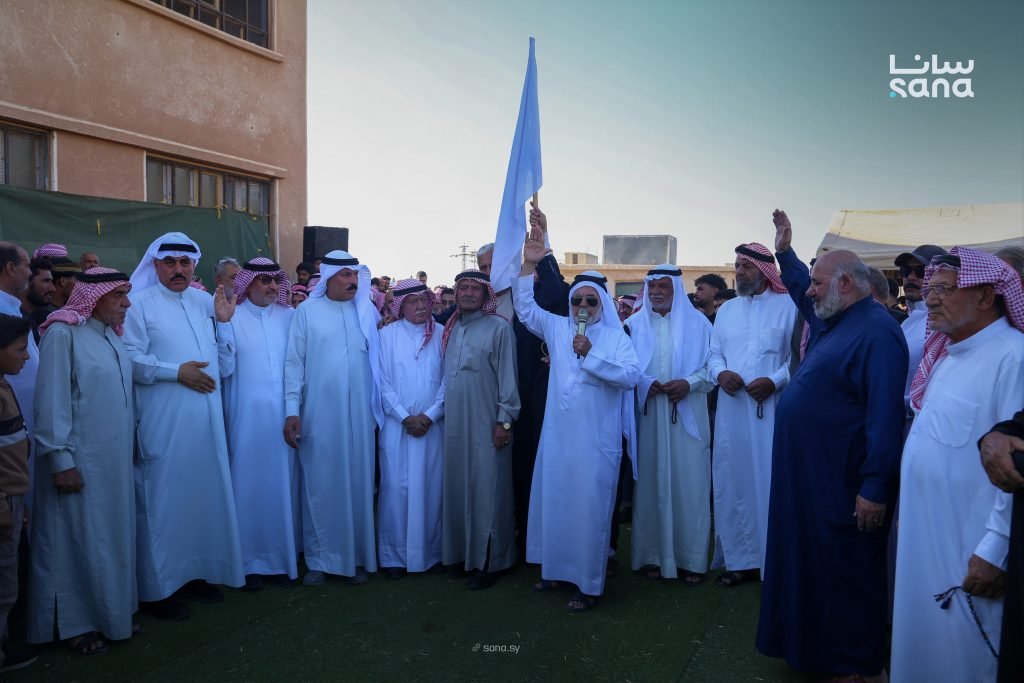
A significant tribal reconciliation agreement was finalized in the town of Umm al-Mayadhin, located in the southern province of Daraa, on Monday. The accord, which resolved a long-standing dispute between the al-Ruwaiss and al-Masaeed families, was held under the auspices of the Daraa provincial authorities and involved the General Reconciliation Council alongside local tribal elders and community leaders.
This event highlights a growing trend within the province to address interpersonal and inter-tribal conflicts through traditional local mechanisms. By fostering dialogue and direct mediation, stakeholders aim to move away from cycles of litigation or violence, instead prioritizing the restoration of social ties and the strengthening of community stability. This move is being viewed by local observers as a concrete step toward institutionalizing a culture of reform that has roots deep within the history of the Hauran region.
Ghassan al-Mahamid, a member of the General Reconciliation Council in Daraa, emphasized that the act of reconciliation is an essential component of the social fabric of the Hauran society. During his remarks, al-Mahamid noted that the tradition of tribal and community mediation had faced significant challenges in previous years due to external interference, corruption, and the influence of favoritism. However, he stressed that efforts have been successfully directed toward revitalizing these traditional bodies, notably through the formalization of the General Reconciliation Council, which evolved from the former reform committees.
The ceremony served as a platform for various community leaders to advocate for the durability of such peace agreements. Engineer Ali Zayed al-Sharif, representing the Nasib reform committee, highlighted the importance of not only reaching a settlement but also maintaining the outcomes of the reconciliation to prevent the recurrence of grievances. He stressed that the primary objective for all local stakeholders remains the protection of the community from the risks of civil strife and social fragmentation.
Local notable Basil al-Mahamid echoed these sentiments, noting that such initiatives are vital for the preservation of public order and security throughout the province. The gathering concluded with a collective commitment to prioritize understanding and communal cooperation over conflict.
As Daraa continues to navigate the complexities of post-conflict recovery, the success of localized reconciliation efforts in towns like Umm al-Mayadhin underscores a broader shift toward community-led conflict resolution. By relying on established local authorities and traditional mediation, these initiatives provide a framework for stability that, according to participants, serves to preserve the social cohesion of the province, ensuring that future disputes can be managed through dialogue and constructive engagement rather than escalation.
