Al-Sham Magazine Explores Art and Literature in Transitional Justice
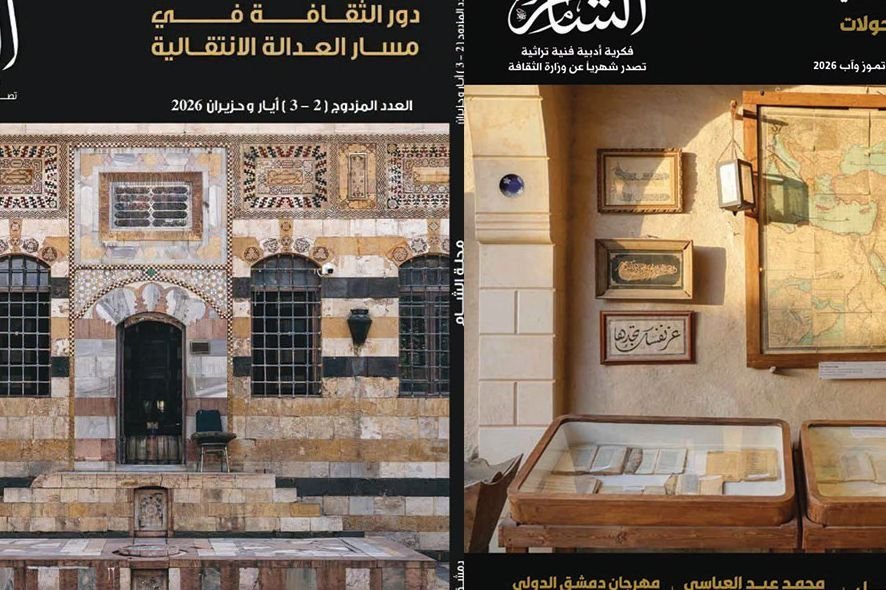
The latest double issue of Al-Sham magazine, published by the Syrian Ministry of Culture, addresses a range of intellectual and cultural topics critical to the current Syrian landscape. The publication focuses on the role of literature, art, and documentation in safeguarding national memory and advancing pathways for transitional justice. Through its various sections, the magazine offers critical perspectives on the intersection of culture and citizenship, the role of women, and the representation of the Euphrates region in drama, aiming to contribute to the cultural framework of a new Syria.
In a featured section on “Transitional Justice,” Fadel Abdul Ghany, Executive Director of the Syrian Network for Human Rights, asserted that the culture of transitional justice extends beyond legal frameworks. He argued that it serves as a foundational knowledge and social pillar necessary to ensure the long-term recognition of rights. Dr. Mohammed Khair Mousa, intellectual supervisor at the Fanar Foundation, echoed this sentiment, emphasizing that the “engineering of culture” and the preservation of the memory of pain and trauma are essential entry points for civil peace and the prevention of recurring tragedies. He called for the development of a comprehensive national cultural plan.
Regarding literature and documentation, researcher Lababa Al-Hawari argued that literature provides a human dimension to history, complementing official archives. Investigative journalist Wissam Shahla highlighted the necessity of transforming the Syrian digital archive into interactive educational and cultural material accessible to new generations, shifting beyond abstract legal knowledge toward comprehensive social recognition.
Al-Sham also dedicated space to the visual arts. Artist Assad Farzat reviewed the role of art in visually documenting the Syrian tragedy, positing that such works serve as testimonies to the era, embodying human suffering and preserving the memory of victims within the public sphere.
In another section, the double issue (4-5), titled “Tribalism: Culturally and Socially – A Reading of Transformations,” addressed the role of the tribal component within the Syrian context. Novelist Islam Abu Shakir proposed converting tribal guest houses (mudhafat) into intellectual salons to help foster a sense of citizenship. Meanwhile, Shahla Al-Ajili, a professor of modern Arabic literature, discussed the agency of women in the Raqqa and Euphrates valley regions, calling for a re-evaluation of women’s roles within local social structures.
The issue also includes research on the status of tribalism in Syrian history and politics, alongside critical interventions concerning Syrian drama. Journalist Hassan Abdullah Al-Khalaf advocated for moving away from stereotypical representations of the Euphrates region in television drama, urging for portrayals that reflect the region’s diversity and the intersection of urban and rural life. These discussions are part of a broader effort by the magazine to link literary and artistic creativity with questions of identity, justice, and the social transformations occurring in Syria.
