Damascus and Berlin: From Trust-Building to Reconstruction
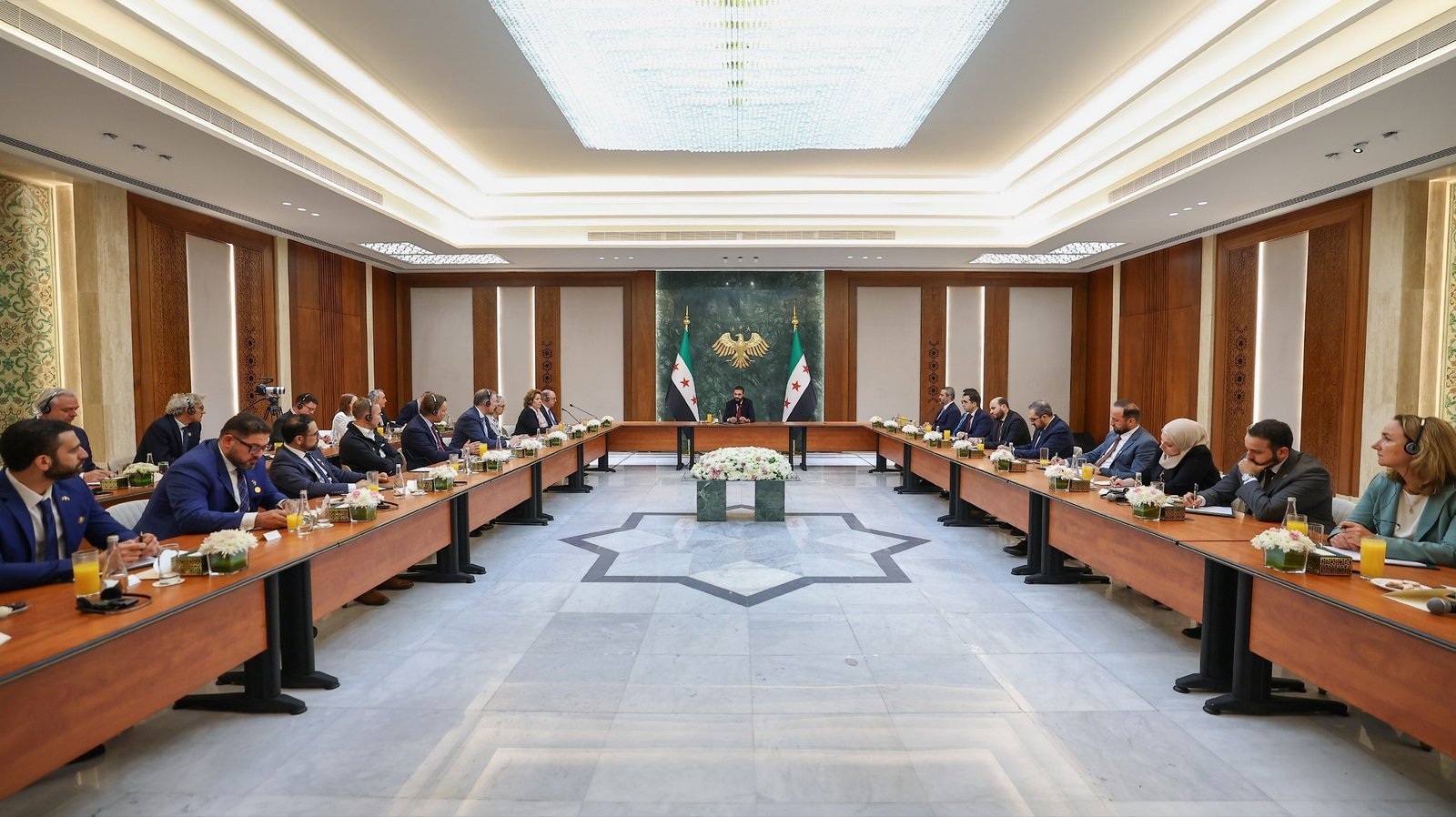
DAMASCUS – In a strategic shift reflecting a maturing diplomatic and economic vision for “New Syria,” Syrian President Ahmed Al-Sharaa, accompanied by Foreign Minister Al-Shaibani, hosted a high-level German economic delegation in Damascus. This meeting represents the culmination of a gradual rapprochement between the two capitals, signaling an official transition from “trust-building” to active investment and direct German participation in major reconstruction efforts in the Middle East.
Foreign Minister Al-Shaibani opened the proceedings by highlighting the foundations of this renewed relationship, noting that German diplomatic delegations were among the first to visit Damascus. He stated that the discussions held during those early visits have now materialized into concrete opportunities. The Minister expressed gratitude to President Al-Sharaa for facilitating the evolution of Syrian-German relations beyond traditional political and security frameworks toward the establishment of significant economic partnerships.
During the meeting, President Al-Sharaa outlined the readiness of the Syrian state to attract European capital. He reviewed the progress made by state institutions over the past two years, noting that Damascus has conducted a thorough assessment of the current landscape and developed comprehensive recovery plans. The President explained that the government has worked on parallel tracks to remove obstacles, including efforts to lift sanctions and restore international ties, with the ultimate goal of creating a suitable environment for major international companies to contribute to the nation’s reconstruction.
Addressing the German delegation, President Al-Sharaa emphasized that the preliminary phase of relationship-building has concluded. “We have moved past the phase of introductions and mutual trust; now is the time to begin work,” he stated, reflecting the leadership’s confidence in the stability of the current economic environment.
Highlighting the dynamics of post-conflict investment, the President cautioned that the window of opportunity in Syria is finite. He explained that as economic growth reaches its peak, early entry for German firms into sectors such as infrastructure, energy, and technology offers a unique opportunity to secure the highest potential returns before the market reaches saturation.
Syria is looking toward Germany’s expertise in engineering, industry, and urban planning as it launches its reconstruction phase. The German delegation expressed pride in supporting these efforts, viewing their presence as a “historic moment” in the cooperative journey between the two nations, built upon the foundation of trust established during previous diplomatic engagements.
Concluding his remarks, President Al-Sharaa emphasized that Syria has evolved into a global focal point for capital seeking “safe havens.” He noted that accelerating support and providing the necessary tools will hasten the cycle of production and economic recovery within Syria.
Germany’s early recognition of the importance of Syrian stability—both for the Middle East and European security, particularly regarding Mediterranean stability and refugee issues—has positioned it as a key partner. This pragmatic approach has paved the way for Germany to become a primary European partner in Syria’s economic recovery, a fact underscored by the high-level composition of the visiting delegation.
