
Daraa: 38% of Wheat Payments Disbursed to Farmers in Izra
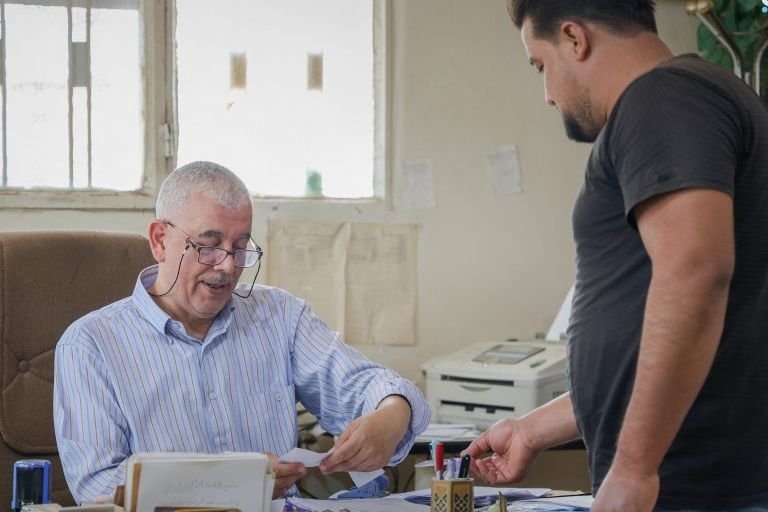
The director of the Cooperative Agricultural Bank branch in Izra, Daraa province, Majed Al-Hariri, announced that the payment process for wheat crops delivered to the Syrian Grain Establishment is progressing steadily. As of Tuesday, 38 percent of the total funds due to farmers have been disbursed.
Al-Hariri stated that the total value of payments processed to date through the Izra branch has reached approximately 500 million and 300 thousand Syrian pounds. He explained that the disbursement follows a specific mechanism designed to organize payments and ensure they are distributed according to available financial resources. Under this system, farmers receive one million Syrian pounds as an initial installment for their invoices, with the remaining balance to be settled in three equal monthly installments.
Regarding the priority of payments, the branch director noted that the process is based on the sequence in which lists of farmers and their respective dues are received from the Syrian Grain Establishment. He emphasized that no new payment schedules are initiated, nor are subsequent lists processed, until the current list is fully settled. This approach is intended to ensure transparency and organization throughout the payment operations.
According to data provided by the Syrian Grain Establishment branch in Daraa, the total financial appropriation allocated for settling payments for wheat crops delivered to the state’s centers stands at 1 billion, 300 million, and 687 thousand Syrian pounds. These measures are part of ongoing government efforts to settle dues to farmers for their wheat supplies, with disbursements continuing sequentially based on the arrival of documentation and the availability of liquidity in authorized banks.
This payment process is part of regular procedures implemented by government institutions across Syrian provinces to safeguard farmers’ rights and encourage the delivery of strategic crops to state-run facilities. Daraa province remains one of the vital agricultural regions upon which the state relies to bolster its strategic wheat reserves.
